
Carlos and the Cuban Mojo Criollo
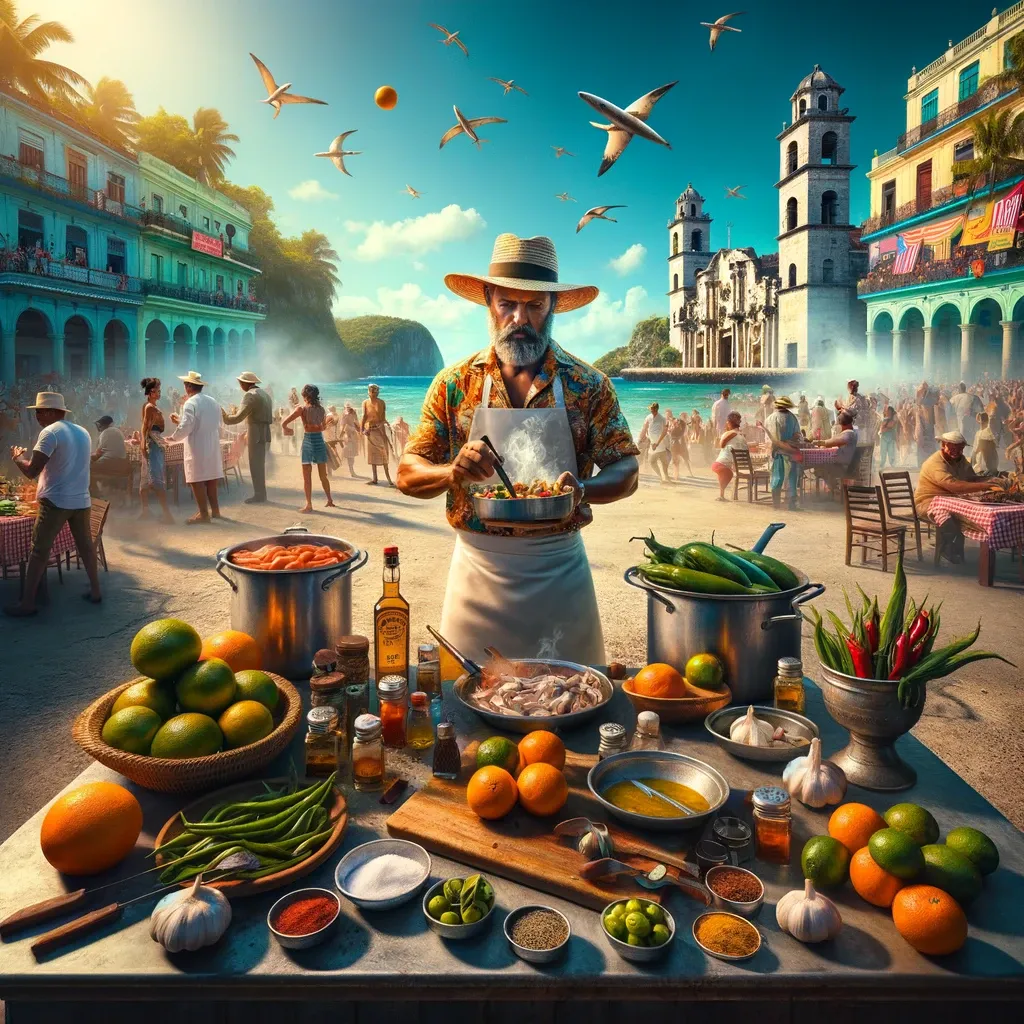
Oranges in one hand, limes in the other, and a boat waiting at the shore. In Cuba, among the drums and the painted walls, there was a fisherman named Carlos who knew the sea better than most men know their own street. He was famous for something else too: a mojo criollo so good the locals half-joked that fish leapt into his boat for the smell of it. He made it under a hard Cuban sun, pressing ripe oranges and sharp limes into a bowl and pouring in olive oil until the whole thing shone like the water off the reef.
Garlic was the backbone. He minced eight cloves, and each one pushed the citrus and the oil a little deeper. A teaspoon of cumin brought a warm, old smell, as if from a market far away, and salt and pepper pulled everything into focus.
Word of the sauce traveled through Cuba’s streets, from the crowded markets of Havana to the quiet shores of the countryside. In time it reached a well-known chef from the capital, a man with a refined palate and prizes from abroad. He doubted a fisherman’s sauce could be worth the talk, so he challenged Carlos to a public cook-off at the island’s grand fiesta, the yearly celebration of Cuban music, dance, and food.
The fiesta filled the plaza with color and noise, a fine stage for a contest. On one side stood Carlos with his few plain ingredients. On the other stood the chef, surrounded by rare spices and goods from around the world.
The contest began, and Carlos worked with steady hands and an easy face. He poured the orange and lime juice into a bowl, juice from Cuban groves he had known all his life. The garlic and cumin followed, and the crowd leaned in at the smell. He stirred slowly, and into every turn of the spoon went the sea he loved and the island that raised him.
The chef, meanwhile, built a dish from the flavors of half the world, and it showed his skill. Yet when the plates reached the judges, it was Carlos’s fish in its mojo that held the table. The garlic was bold, the citrus bright, the spice warm, and all of it served the fresh catch rather than hiding it. The judges tasted and fell quiet. So did the crowd.
When Carlos was named the winner, the plaza broke into cheers. The win belonged to him, and it belonged to the island too, a reminder that a dish is good when it is honest about where it comes from. The sauce of a fisherman was called a treasure of Cuba, and the fiesta made sure no one forgot it.
People told the story for years after. It kept Carlos’s mojo in the island’s memory along with the color of its seas. A few oranges, a few limes, a fistful of garlic, and a man who knew the water. Some sauces are cooked. This one was caught.
Cuban Mojo Criollo
- Serves
- 4
- Time
- 5 minutes (+1 hour resting)
- Difficulty
- Easy
Ingredients
Method
- Whisk together all ingredients.
- Allow the mixture to sit for at least an hour to blend the flavors.
Notes
- Serving & Pairing: Ideal as a marinade for pork or chicken, or as a dipping sauce for yuca fries. The garlicky, citrusy sauce is a Cuban classic.
From Fig & Ginger: https://www.figandginger.com/recipes/discover-the-zesty-cuban-mojo-criollo/
You might also make

Salsa Criolla for Santiago's Asado
Latin American, 10 minutes

Salsa de Piña, a Honduran Surfer's Pineapple Salsa
Latin American, 10 minutes (+30 minutes resting)
Guasacaca, the Green Sauce That Ended a Feud
Latin American, 10 minutes