
Lift the lid on a jar of cloves and the room changes. Before the lid is back on, the smell has crossed the kitchen and gone back a few thousand years. Every spice keeps a story, and some of them have kept it a very long time.
The story begins in the mists of early time, where the Tigris and the Euphrates carried the first civilizations and the Indian subcontinent rang with its old tales. There, spices were more than something tossed in a pot. They were medicines that could heal, cover for the smell of decay, and offerings carried up to the gods. Cinnamon, ginger, and the gold of turmeric held court in medicine chests and on altars alike.
As empires grew hungry and grew wide, spices became the quiet players in stories of power and diplomacy. The pharaohs, chasing forever, carried them into their tombs. The Greeks and Romans, who knew a good thing when they tasted it, poured them into banquets, potions, and love charms.
Then came an age when men went to sea not for gold, not for land, but for a smell. This was the Age of Exploration, when maps were redrawn by the pull of spice more than the weight of the sword. Rough sailors under the Iberian sun, led by a bold Vasco da Gama, rode out storms and hard water to find a sea road to India’s riches, and broke the hold of the desert caravans.
Rivalry hung in the air like smoke. The Netherlands, a quiet corner of Europe, became the dark horse of the story. Its East India Company, more empire than enterprise, wrote its reach and its appetite across oceans and continents.
Today the story has changed its clothes but kept its heart. Every pinch in our kitchens has a backstory of nations and navigators, emperors and entrepreneurs. The roads carry trucks now instead of camels, yet India and Indonesia still call, and we still follow the smell.
Now pull open the spice drawer. Every jar in it came a long way to get here, and each one is ready to tell you how.
Seventy-nine histories from the bazaar
Open the spice drawer and take a pinch of anything: the salt, or the brown dust at the bottom of the cinnamon jar. Between two fingers it weighs almost nothing. Yet ships were rigged for it, cities ransomed with it, islands emptied over it, people bought and sold so it could be cheap. Every jar on the shelf is a door we keep closed. Here is the whole bazaar, seventy-nine jars of it, each opened a little, the old dates still on the hinges.
79 jars in the bazaar
Seeds
Peppers and berries
Pods and buds
Flowers and petals
Barks and roots
Dried herbs
Leaves
Fruits, sours and resins
Salt and sugar
Not in the bazaar yet. Try another name.

Seeds
Ajwain
Small ridged fruits of Trachyspermum ammi, an annual herb of the carrot family thought to have arisen in the eastern Mediterranean, possibly Egypt
Crush a few seeds and you smell thyme, because ajwain carries the same compound, thymol, that once made it worth shipping to Germany by the ton.
-
antiquity
Eastern Mediterranean to India
Ajwain is thought to have arisen in the eastern Mediterranean, possibly Egypt, and spread to India by way of the Near East. No firm date for that journey survives.
epubs.icar.org.in -
1911 to 1914
Bombay, India, and Germany
Before 1914 the bulk of India's ajwain seed went to Germany, over 90 percent of exports in 1911 to 1912, nearly all shipped from Bombay. German stills turned it into thymol.
journal.iisc.ac.in -
1910s
United States
Thymol, the compound behind ajwain's thyme-like bite, was used in the United States in the 1910s to treat hookworm. A kitchen seed had become a dose.
en.wikipedia.org -
1918
Bangalore, India
With wartime exports to Germany stopped, chemists at the Indian Institute of Science in Bangalore ran semi-commercial trials distilling thymol from ajwain, in charges of up to 1,500 pounds of seed.
journal.iisc.ac.in -
2019 to 2020
Rajasthan and Gujarat, India
India grew 27,920 tonnes of ajwain on 37,810 hectares in 2019 to 2020, and sells it to the Gulf, Southeast Asia and the United States.
epubs.icar.org.in -
today
India, Afghanistan and Ethiopia
Cooks fry ajwain in ghee for parathas and naans. In Afghanistan it is sprinkled over bread and biscuits, and in Ethiopia it is called netch azmud, white cumin. One seed, many breads.
en.wikipedia.org

Seeds
Aniseed
Dried fruit of Pimpinella anisum, an annual herb of the carrot family native to the eastern Mediterranean and southwest Asia
The licorice note in ouzo, rakı and pastis comes from a small grey seed that once paid a toll to cross London Bridge.
-
c. 1550 BCE
Egypt
The Ebers Papyrus, an Egyptian medical text from about 1550 BCE, names a plant scholars read as anise, used against stomach and dental complaints.
nutritionalgeography.faculty.ucdavis.edu -
2nd century BCE
RomeLegend
Cato gave a recipe for Roman must cakes made with anise, cumin and lard. It is often told, though not proven, that such cakes, broken over a bride, were the ancestor of the wedding cake.
blog.herbsociety.org -
1st century CE
Rome
Pliny the Elder named Crete and Egypt as the sources of the best anise and listed it among remedies for snakebite and much else.
nutritionalgeography.faculty.ucdavis.edu -
c. 800 CE
Frankish Empire
Charlemagne ordered anise planted on the imperial farms. A Mediterranean seed went north on an emperor's word.
henriettes-herb.com -
1305
London, England
In 1305 Edward I listed anise among the drugs to be taxed when carried across London Bridge. The seed paid its way into the city.
henriettes-herb.com -
1480
London, England
The royal wardrobe of Edward IV was perfumed with anise in 1480. A king's linen smelled faintly of licorice.
henriettes-herb.com -
today
Egypt, India, China and Turkey
Egypt, India, China and Turkey supply most of the anise Europe imports, with Syria close behind. Much of it goes into spirits and herbal remedies.
commodity-board.com

Seeds
Annatto
Red-coated seeds of Bixa orellana, the achiote shrub native to tropical Central and South America
The orange in your cheddar comes from a seed the Aztecs used to make chocolate look like blood.
-
before 1521
Central Mexico
The Aztecs added annatto to cacao drinks to turn them red, tying the drink to blood. One anthropologist argues the word chocolate first meant a cacao drink made with annatto in Guatemala.
en.wikipedia.org -
16th century
Mexico
Annatto pigment served as red ink for Mexican manuscript painting in the 16th century. Spanish and Portuguese colonizers carried the seeds home.
en.wikipedia.org -
16th and 17th centuries
Southeast Asia, Africa and the Caribbean
Over the 16th and 17th centuries annatto spread to Southeast Asia, Africa, the Caribbean, Hawaii and southeastern North America. In the Philippines it took root for its dye.
en.wikipedia.org -
colonial era
Western EcuadorLegend
Tsáchila tradition tells that a shaman, seeking a cure for smallpox, was led to an achiote bush, and the people painted themselves red and lived. The story is told, not proven.
en.wikipedia.org -
1743
Netherlands
A Dutch household dictionary of 1743, the Huishoudelyk Woordboek, gives the earliest known record of annatto coloring cheese. English Gloucester had been colored since the 16th century.
en.wikipedia.org -
today
Peru and Brazil
Peru exports the most annatto seed and Brazil grows the most. It reddens recado rojo for cochinita pibil and dyes cheddar orange. The color in the cheese is a borrowed sunset.
en.wikipedia.org

Seeds
Caraway
Dried crescent-shaped fruit of Carum carvi, a biennial of the carrot family native to Europe and western Asia
The sharp perfume of rye bread is a seed that prehistoric Swiss villagers left behind and Shakespeare served after supper.
-
prehistoric
Swiss lake villages
Archaeologists have found caraway seeds at the prehistoric lake dwellings of Switzerland, proof of its long life in Europe. Small seeds outlasted the houses.
supplysidesj.com -
1st century CE
Roman Empire
The Greek physician Dioscorides recommended caraway oil as a tonic for pale girls.
supplysidesj.com -
c. 1390
England
The Forme of Cury, compiled around 1390 by the master cooks of Richard II, mentions caraway.
supplysidesj.com -
Middle Ages and after
EuropeLegend
Folk belief held that caraway kept lovers from straying, kept pigeons and chickens from flying off, and stopped thieves from taking whatever held it. It is told, not proven.
supplysidesj.com -
c. 1598
London, England
In Shakespeare's Henry IV, Part 2, Justice Shallow offers a last year's pippin with a dish of caraways. The seed was more popular in England then than it is now.
supplysidesj.com -
2010s to today
Finland
By the mid-2010s Finland supplied around 30 percent of the world's caraway crop. A seed of the long northern summer.
yle.fi

Seeds
Celery Seed
Tiny dried fruits of Apium graveolens, the wild celery of Mediterranean marshes and coasts that also gave us stalk celery and celeriac
Greek athletes were crowned with it and Greek graves were covered in it, so a pinch of celery seed carries both victory and mourning.
-
c. 1328 to 1318 BCE
Valley of the Kings, Egypt
A floral collar from Tutankhamun's embalming cache holds olive and persea leaves, nightshade berries and what may be celery. Even the museum that keeps it adds a question mark.
metmuseum.org -
c. 8th century BCE
Greece
In Homer's Odyssey, soft meadows of violets and celery bloom in the garden of the nymph Calypso.
ahpa.org -
Greek myth
Nemea, GreeceLegend
Greek myth tells that the baby Opheltes was set down on a bed of wild celery at Nemea and killed there by a serpent. The Nemean Games were founded in his memory, and the victor's crown was celery.
nemeacenter.berkeley.edu -
c. 515 to 470 BCE
Selinus, Sicily
Selinus, a Greek colony named for the wild celery, selinon, that grew there, struck silver coins with a celery leaf on both faces. A city signed its money with a marsh plant.
coinweek.com -
early 5th century BCE
Isthmus of Corinth, Greece
The poet Pindar praised an athlete who won "the crown of wild Dorian celery in the Isthmian glade." Later Greeks tied the same plant to funerals and the dead.
ahpa.org -
late Roman era
Rome
Celery fruits and leaves turn up often as flavorings in the Roman cookbook attributed to Apicius. The Romans valued celery more for the pot than for the gods.
gernot-katzers-spice-pages.com -
1940 to today
Punjab, India
Celery came to India from France around 1940 as a seed crop. Punjab now grows about 90 percent of India's celery seed, much of it exported to American and European markets.
nhb.gov.in

Seeds
Coriander Seed
Dried round fruit of Coriandrum sativum, the annual of the carrot family whose leaves are cilantro, native to the Mediterranean and southwest Asia
Tutankhamun went into his tomb with about half a liter of these seeds, the same ones that now perfume your gin.
-
Pre-Pottery Neolithic
Nahal Hemar Cave, Judean Desert
Fifteen dried coriander fruits turned up in a Pre-Pottery Neolithic B layer of Nahal Hemar Cave. They are among the oldest coriander finds anywhere.
en.wikipedia.org -
c. 1323 BCE
Valley of the Kings, Egypt
About half a liter of coriander seed lay in Tutankhamun's tomb. Coriander does not grow wild in Egypt, so someone grew it on purpose.
en.wikipedia.org -
c. 1200 BCE
Pylos, Greece
Linear B tablets from the palace at Pylos record coriander grown for making perfume. The cook's seed also scented the palace.
en.wikipedia.org -
first millennium BCE
Ancient Israel
The Torah describes manna as tasting like coriander seed, a sign the spice was already familiar. Bread from heaven was measured against a kitchen jar.
en.wikipedia.org -
1st century CE
Roman Britain
The Romans brought coriander to Britain, using it with vinegar and cumin to preserve meat. Centuries later, farms in Essex grew it for gin distillers.
selfsufficientish.com -
2012
United States
A 2012 genetic study linked a variant near smell receptor genes, including OR6A2, to disliking cilantro, the leaf of the same plant. Part of the soap some people taste may be in their genes.
arxiv.org -
today
India and Russia
India is the largest supplier of coriander seed. In 2025 Russia ranked second, exporting about 48,000 tonnes, much of it grown in Crimea.
interfax.com

Seeds
Cumin
Dried fruit of Cuminum cyminum, a small annual of the carrot family from southwest Asia and the eastern Mediterranean
Cumin is in the oldest written recipes we have, and in medieval England a tenant could pay his rent with it.
-
c. 1750 BCE
Babylonia, Mesopotamia
The Yale culinary tablets, written in Babylonia around 1750 BCE, hold some of the oldest known recipes, and cumin is in them. Its name may reach back to Sumerian gamun.
kpbs.org -
14th century BCE
Thebes, Egypt
A basket full of cumin seeds was found in the Theban tomb of Kha, a royal architect of the 14th century BCE. He took his seasoning with him.
aramcoworld.com -
9th century BCE
Kalhu (Nimrud), Assyria
Palace inscriptions record cumin set out as a table condiment at a royal feast of the Assyrian king Ashurnasirpal II in the 9th century BCE.
kpbs.org -
13th century
England
In 13th-century England cumin was valuable enough that rents were often paid in it, and Henry III's household bought it twenty pounds at a time.
kpbs.org -
Middle Ages
EuropeLegend
Medieval Europeans believed cumin kept lovers faithful. It is told that girls gave cumin cakes to men leaving on long journeys, to bring them home safe and true. Folk belief, not record.
herbsociety.org -
by about 1600
New Mexico
Spanish settlers had brought cumin to New Mexico by about 1600. In the 19th century Anglo-American settlers met its pairing with chiles, and Tex-Mex cooking grew from that meeting.
kpbs.org -
today
India
India grows about 70 percent of the world's cumin and eats nearly two-thirds of the global crop. The rest of the world shares what is left.
aramcoworld.com

Seeds
Dill Seed
Flat oval fruits of Anethum graveolens, an annual herb of the carrot family probably native to Central Asia
Puritan and Quaker children chewed these seeds to get through long church meetings, which is why North Americans once called them meeting seeds.
-
Late Neolithic
Switzerland
The earliest confirmed evidence of dill cultivation comes from late Neolithic settlements on Swiss lake shores.
newworldencyclopedia.org -
c. 1400 BCE
Thebes, Egypt
Dill was found in the tomb of the pharaoh Amenhotep II, dating to around 1400 BCE. Some twigs outlasted the dynasty.
en.wikipedia.org -
7th century BCE
Samos, Greece
Dill turns up in the Greek city of Samos around the 7th century BCE, and the philosopher Theophrastus later wrote of it.
en.wikipedia.org -
Greek myth
GreeceLegend
Greek myth tells that dill was once a young man named Anethus who was turned into the plant. The botanists kept his name for the genus, Anethum.
en.wikipedia.org -
1st century CE
Judea
The Gospel of Matthew scolds the Pharisees for tithing dill, mint and cumin while neglecting justice, and the Talmud requires tithes on its seeds, leaves and stems. Even a small seed was counted.
newworldencyclopedia.org -
17th and 18th centuries
New England and Canada
Puritans and Quakers gave their children dill seeds to chew during long church meetings, since dill was thought to quiet hunger. The seeds became known as meeting seeds.
newworldencyclopedia.org -
today
Egypt and Eastern Europe
Most imported dill now comes from Egypt, other Mediterranean countries or Eastern Europe. The seed is rich in carvone, the same compound that flavors caraway.
gernot-katzers-spice-pages.com

Seeds
Fennel Seed
Dried fruit of Foeniculum vulgare, a feathery perennial of the carrot family native to the Mediterranean
The Greeks named a battlefield after this plant, and myth says it once carried fire down from the gods.
-
13th century BCE
Mycenaean Greece
Fennel appears on a Mycenaean tablet of the 13th century BCE, in a list of spices. Someone was already keeping count.
ahpa.org -
Archaic Greece
GreeceLegend
Greek myth tells that Prometheus stole fire from the gods and carried it to people inside a fennel stalk, green outside and dry within. It is a story, not history.
laidbackgardener.blog -
490 BCE
Marathon, Greece
Marathon, where Athenians met the Persians in 490 BCE, takes its name from the Greek word for fennel, which grew thick on the plain. A famous battle was fought in a fennel field.
ahpa.org -
early 9th century
Frankish Empire
Charlemagne ordered fennel grown on all imperial farms and in monastery gardens, so that its remedies would be close at hand.
laidbackgardener.blog -
c. 10th to 11th century
Anglo-Saxon England
The Anglo-Saxon Nine Herbs Charm, preserved in the Lacnunga manuscript, names fennel among nine healing plants and calls on the god Woden. Medicine and magic shared one page.
nutritionalgeography.faculty.ucdavis.edu -
today
Gujarat, India
India is the world's largest producer, consumer and exporter of seed spices, and Gujarat alone grows more than 90 percent of India's fennel.
epubs.icar.org.in

Seeds
Fenugreek
Hard golden seeds of Trigonella foenum-graecum, an annual legume of the eastern Mediterranean and western Asia
The maple syrup smell that haunted Manhattan for four years came from a New Jersey plant processing these seeds, which share syrup's sweetest aroma compound.
-
c. 4000 BCE
Tell Halal, Iraq
Charred fenugreek seeds recovered at Tell Halal in Iraq have been carbon dated to about 4000 BCE, among the oldest traces of the plant in human hands.
en.wikipedia.org -
c. 1323 BCE
Valley of the Kings, Egypt
Desiccated fenugreek seeds were found in the tomb of Tutankhamun. A boy king went into the dark with a handful of something bitter and golden.
en.wikipedia.org -
2nd century BCE
Italy
Cato the Elder lists fenugreek with clover and vetch as crops grown to feed cattle. The Latin name, faenum Graecum, means Greek hay, and the Romans meant it.
en.wikipedia.org -
c. 800
Frankish Empire
Charlemagne's Capitulare de villis, a decree for the royal estates, lists the plants their gardens must grow. Fenugreek comes third, after the lily and the rose.
gardenvisit.com -
2005 to 2009
New York City and North Bergen, New Jersey
From 2005 a maple syrup smell drifted over New York now and then. In 2009 Mayor Michael Bloomberg traced it to a New Jersey plant processing fenugreek seeds, which share the aroma compound sotolone with syrup.
scientificamerican.com -
today
Rajasthan, India
India is a major producer of fenugreek, called methi, and over 80 percent of its crop comes from Rajasthan. A desert state grows the seed that smells of hay and syrup.
en.wikipedia.org

Seeds
Mahlab
Kernel from inside the stone of Prunus mahaleb, the St. Lucie cherry, a small wild cherry tree of southern Europe and western Asia
Each pale bead in the jar is the kernel from inside a wild cherry stone, the scent behind holiday breads from Athens to Aleppo.
-
3rd millennium BCE
Tell Hammam et-Turkman, northern Syria
Archaeobotanists found Prunus mahaleb kernels at Tell Hammam et-Turkman, an Early Bronze Age site, and judged they probably served as flavoring. Someone was already cracking cherry stones for what lay inside.
link.springer.com -
3rd millennium BCE
Sumer, Mesopotamia
Early Sumerian writings mention a ḫalub tree, a durable fruit-bearing hardwood whose seeds and leaves were known as medicine. Scholars consider mahaleb a likely candidate, not a certain one.
en.wikipedia.org -
4th century CE (legend)
Caesarea, CappadociaLegend
Greek families flavor vasilopita, the bread for St. Basil's Day, with mahleb and bake a coin inside to honor the saint. Why a coin is a matter of legend, told, not proven.
research.reading.ac.uk -
late 12th century
Seville, al-Andalus
Ibn al-Awwam of Seville, in his book on agriculture, described how to cultivate mahaleb and how to prepare its seeds. Andalusia knew the little cherry too.
en.wikipedia.org -
1317
Italy
The word mahaleb first appears in Latin in 1317, in the medical encyclopedia of Matthaeus Silvaticus. The botanist Carolus Clusius fixed the spelling in 1593.
en.wikipedia.org -
today
Syria and the former Ottoman lands
Mahleb is still used mostly in lands that once belonged to the Ottoman Empire, and Syria is the main exporting country.
en.wikipedia.org -
today
Greece and the Middle East
Greek bakers count mahleb with mastic and cardamom as their holy trinity of spices. Old cookbooks warned that sellers cut the powder with flour, so buy whole seeds and grind them.
research.reading.ac.uk

Seeds
Mustard Seed
Seeds of mustard plants in the cabbage family, chiefly brown, black and white mustard (Brassica juncea, Brassica nigra and Sinapis alba), native to Eurasia
Most of the seed in French mustard grows on the Canadian prairie, and since 1937 the word Dijon on a label has named a method, not a place.
-
c. 9000 BCE
Jerf el Ahmar, Syria
Archaeologists found ground seeds of the mustard genus Sinapis in a seed cake dated to between 9224 and 8753 BCE. Mustard was in the bread before anyone built a city.
en.wikipedia.org -
c. 5th century BCE
Savatthi, IndiaLegend
A Buddhist story, told rather than proven, has the grieving Kisa Gotami beg the Buddha to cure her dead son. He asks for a mustard seed from a house where no one has died. She finds none.
sites.pitt.edu -
Roman era
Rome
Romans mixed unfermented grape juice, the must, with ground mustard seed to make mustum ardens, burning must. The condiment's name still carries the grape.
en.wikipedia.org -
1336
Dijon, FranceLegend
Dijon tradition holds that mustard was served at the table of King Philip VI in 1336, and another telling has guests at a Burgundy feast eating 320 liters of it. Both stories are told, not proven.
en.wikipedia.org -
1856
Dijon, France
Jean Naigeon of Dijon replaced the usual vinegar with verjuice, the sour juice of unripe grapes, giving Dijon mustard its modern form.
en.wikipedia.org -
1937
France
A French decree made "Dijon mustard" a generic term with no geographic protection, so it can be made anywhere. A city's name became a method.
en.wikipedia.org -
2021 to 2022
Saskatchewan, Canada, and France
Drought cut the harvest in Canada, the world's largest exporter of mustard seed, and French shoppers faced empty mustard shelves for months in 2022. The heat of Dijon had been growing on the prairie.
npr.org

Seeds
Nigella
Small black seeds of Nigella sativa, an annual of the buttercup family native to southeastern Europe and western Asia
The black seeds on your naan went into Tutankhamun's tomb, and a hadith calls them a cure for every disease except death.
-
second millennium BCE
Anatolia, Turkey
Nigella seeds were found in a Hittite flask in Turkey dating from the second millennium BCE.
en.wikipedia.org -
c. 1323 BCE
Valley of the Kings, Egypt
Nigella seeds were among the goods placed in the tomb of Tutankhamun. A boy king was buried with the seed that still tops bread.
en.wikipedia.org -
c. 8th century BCE
Judah
The Book of Isaiah says this seed is beaten out with a stick, not crushed under a cart wheel. Farmers in the region still thresh it the same way.
ww2.odu.edu -
7th century CE
Arabia
A hadith records the Prophet Muhammad urging the use of the black seed, saying it holds a cure for every disease except death. Belief kept the seed in both pantry and medicine chest.
hadithunlocked.com -
c. 1025
Persia
Avicenna's Canon of Medicine, completed around 1025, described nigella as a treatment for difficult breathing.
en.wikipedia.org -
today
South Asia and the Middle East
Sold as kalonji or black cumin, nigella goes into panch phoron, the Bengali five-spice mix, onto naan, and into majdouleh, a braided string cheese of the Middle East.
en.wikipedia.org

Seeds
Nutmeg and Mace
Seed (nutmeg) and its red lacy covering (mace) from one tree native to Indonesia's Banda Islands
Grate it and the kitchen fills. For centuries this seed grew only on a few small islands, and people died for them.
-
c. 3,500 years ago
Pulau Ai, Banda Islands
The earliest evidence of nutmeg use is residue on pottery shards from Pulau Ai in Indonesia's Banda Islands, about 3,500 years old.
en.wikipedia.org -
6th century CE
India to Constantinople
By the 6th century CE nutmeg had reached India, then traveled west to Constantinople. Arab traders later kept the Banda source a secret from Europeans.
en.wikipedia.org -
1512
Banda Islands
In early 1512 the first Europeans reached Banda under António de Abreu and spent a month buying nutmeg, mace and cloves. In Europe, spices could sell for about 300 times their Banda price.
en.wikipedia.org -
1621
Banda Islands
Chasing a nutmeg monopoly, the Dutch East India Company under Jan Pieterszoon Coen conquered Banda in 1621. A population of about 15,000 fell to roughly 1,000.
en.wikipedia.org -
1667
Breda, Netherlands
On 31 July 1667 the Treaty of Breda let the Dutch keep Run, a nutmeg island, while the English kept New Netherland, Manhattan included. A nutmeg island on one side of the table, Manhattan on the other.
en.wikipedia.org -
1810
Banda Neira
In 1810 a British squadron captured the Banda Islands and carried off hundreds of nutmeg seedlings to Ceylon and other colonies. Banda's monopoly was over.
en.wikipedia.org -
1843
Grenada
In 1843 nutmeg reached Grenada aboard a merchant ship sailing from the East Indies to England. The island came to be known as the Island of Spice.
en.wikipedia.org -
1974
Grenada
Grenada's flag, adopted in 1974, carries a split-open nutmeg fruit. In 2004 Hurricane Ivan badly damaged the island's nutmeg trees.
en.wikipedia.org -
2023
Guatemala, India, Indonesia
In 2023 Guatemala led the world in nutmeg, followed by India and Indonesia. Together the three grew 89 percent of the world total.
en.wikipedia.org

Seeds
Poppy Seed
Tiny seeds of the opium poppy, Papaver somniferum, whose wild ancestor grew around the western Mediterranean
The seeds on a bagel come from the same flower as opium, which is why a few countries still ban them outright.
-
c. 5700 to 5300 BCE
Western Mediterranean
The earliest opium poppy finds in Europe come from the western Mediterranean, where the plant's wild ancestor grew, dated to about 5700 to 5300 BCE. Central and northern Europe follow a few centuries later.
ipna.duw.unibas.ch -
c. 8th century BCE
Greece
Homer's Iliad already knows the poppy as a cultivated plant. The ancients prized its seeds above all for their oil, which went into their cooking.
gernot-katzers-spice-pages.com -
c. 8 CE
RomeLegend
Ovid's Metamorphoses places lush poppies at the mouth of the cave of Sleep, where Night distills their drowsy juice to sprinkle over the world. It is myth, told not proven, though built on a real effect.
theoi.com -
Mughal era
Northern India
Ground poppy seed is a common thickener in the Mughal style of northern Indian cooking, and a cream-white kind serves for pale sauces. The seed disappears and leaves its body behind.
gernot-katzers-spice-pages.com -
2018
Czech Republic
The Czech Republic led the world in poppy seed production in 2018, with about 28,574 tonnes, ahead of Turkey and Spain.
worldatlas.com -
today
Czech Republic
Czech bakers grind poppy seed, cook it with milk, sugar and a little cinnamon, and pack the thick paste into koláče and buchty buns.
english.radio.cz -
today
Singapore, Taiwan and Saudi Arabia
Singapore bars poppy seed sales over their morphine traces, and Taiwan and Saudi Arabia ban them too. A breakfast bagel can still trip an opiate drug test.
en.wikipedia.org

Seeds
Sesame
Seeds of Sesamum indicum, an annual plant domesticated on the Indian subcontinent more than 5,000 years ago
Long before it dotted burger buns, sesame oil traveled from the Indus to Mesopotamia, and its bursting pods may stand behind the words open sesame.
-
c. 3500 to 3050 BCE
Indian subcontinent
Charred sesame from the Indian subcontinent, dated to about 3500 to 3050 BCE, shows the plant was domesticated there at least 5,500 years ago. The seed is small; the memory is long.
en.wikipedia.org -
by 2000 BCE
Mesopotamia
Mesopotamia traded with the Indus by 2000 BCE. Sumerian ilu and Akkadian ellu, words for sesame oil, may echo Dravidian names, a hint that the Indus sold its oil west.
en.wikipedia.org -
c. 1550 BCE
Egypt
The Ebers Papyrus, an Egyptian medical scroll of about 1550 BCE, lists sesame, which the Egyptians called sesemt, among its drugs.
en.wikipedia.org -
14th century BCE
Valley of the Kings, Egypt
Baskets of sesame were laid in the tomb of Tutankhamun. The boy king was sent off with something to press.
en.wikipedia.org -
17th century
Colonial North America
Enslaved West Africans brought sesame to the American colonies in the 17th century. Their name for it, benne, kept in Gullah speech, entered written English in 1769.
en.wikipedia.org -
1704 to 1717
Paris, FranceLegend
Antoine Galland's French Thousand and One Nights gave Europe the spell Sésame, ouvre-toi. Some say it recalls ripe sesame pods splitting open to free their treasure. That is told, not proven.
en.wikipedia.org -
2024
India, Myanmar and Sudan
The world grew about 6.7 million tonnes of sesame in 2024. India, Myanmar and Sudan led, together about a third of the harvest.
en.wikipedia.org

Peppers and berries
Allspice
Dried unripe berry of Pimenta dioica, an evergreen tree native from southern Mexico through Central America and the Caribbean
English traders tasted cinnamon, cloves, nutmeg and pepper in one small brown berry, so they named it for all of them.
-
Maya era
Yucatán and Central AmericaLegend
It is often told that the Maya used allspice to embalm their dead and to flavor their chocolate drink. The embalming story is repeated widely but is not well documented.
blog.herbsociety.org -
before 1493
Jamaica
Before Europeans arrived, the Arawak people of Jamaica crushed the dried unripe berries of the native pimento tree to season smoked meat. Smoke and berry were already old friends.
saveur.com -
1493 to 1496
Caribbean
On Columbus's second voyage, the physician Diego Álvarez Chanca recorded the spice. The Spanish took the berries for peppercorns and called them pimienta, which became pimento in English.
prosea.prota4u.org -
1655
Jamaica
England took Jamaica from Spain in 1655, and English traders came to call the berry allspice for its mix of cinnamon, clove and nutmeg. A spice named after every other spice.
blog.herbsociety.org -
1812
RussiaLegend
Russian soldiers in the war of 1812 are said to have put allspice in their boots to keep their feet warm and free of odor. The story is told often but has not been proven.
herbsociety.org -
1882
Jamaica
Victorian demand for walking canes and umbrella handles cut from the fragrant wood nearly wiped out young trees. Jamaica banned the export of allspice saplings in 1882.
blog.herbsociety.org -
today
Mexico, Central America and the Caribbean
The tree still grows from southern Mexico through Central America and the Caribbean. Its berries season Jamaican jerk at home, and sausages, pickles, cakes and puddings far away.
powo.science.kew.org

Peppers and berries
Black Pepper
Dried berries of the Piper nigrum vine, native to India's Malabar Coast
Every peppercorn in your grinder comes from a vine whose price once sent ships all the way around Africa.
-
by 2000 BCE
India
Black pepper is native to India's Malabar Coast, and Indian cooking has used it since at least 2000 BCE. The English word travels back through Latin piper and Greek to Sanskrit.
en.wikipedia.org -
1213 BCE
Egypt
When Ramesses II died in 1213 BCE, the embalmers stuffed black peppercorns into his nostrils. A king went into the dark with pepper for breath.
en.wikipedia.org -
reign of Augustus
Myos Hormos, Egypt, to India
The geographer Strabo reported about 120 ships a year sailing from the Red Sea port of Myos Hormos to India. Ports such as Muziris sent the spices on toward Rome.
en.wikipedia.org -
1st century CE
Rome
Pliny the Elder priced pepper by the pound: long pepper 15 denarii, white 7, black 4. He grumbled that India drained the empire of 50 million sesterces a year.
en.wikipedia.org -
408 CE
Rome
In 408 the Visigoth king Alaric lifted his siege of Rome for 5,000 pounds of gold, 30,000 pounds of silver and 3,000 pounds of pepper.
en.wikipedia.org -
1498
Calicut, India
In 1498 Vasco da Gama became the first to reach India by sailing around Africa. The pepper coast had a sea road at last.
en.wikipedia.org -
1797
Salem, Massachusetts
In 1797 the Salem ship Rajah came home from Sumatra with pepper that earned a 700 percent profit. Between 1799 and 1846, 179 ships sailed between Salem and Sumatra.
masshist.org -
since 1816
St. George's, Bermuda
Since 1816 a Masonic lodge in Bermuda has paid rent of one peppercorn a year for the Old State House. It reaches the governor on a velvet cushion.
en.wikipedia.org -
2022
Vietnam
Vietnam is now the world's largest pepper exporter. In 2022 it expected to ship 220,000 tonnes, about 55 percent of world output.
vietcetera.com

Peppers and berries
Chili Peppers
Capsicum fruits domesticated in Mexico and South America
The heat in so many old recipes is younger than it tastes. Chilies left the Americas only after 1492.
-
c. 4100 BCE
Southwestern Ecuador
Chili starch grains from archaeological sites show people cooking with chilies about 6,100 years ago, the oldest evidence in a Smithsonian-led study.
sciencedaily.com -
c. 4000 BCE
Central-east Mexico
A 2014 study found that the common chili, Capsicum annuum, was domesticated in a region running from southern Puebla and northern Oaxaca to southeastern Veracruz.
ucdavis.edu -
1493
Caribbean and Spain
The physician Diego Álvarez Chanca, sailing on Columbus's second voyage, brought chilies to Spain. The crew called them pimientos, because their bite resembled black pepper.
en.wikipedia.org -
16th century
Goa, Sri Lanka and Malacca
Portuguese traders carried chilies to Africa and Asia, reaching Goa, Sri Lanka and Malacca within decades of Columbus. Fire travels fast once it finds a road.
en.wikipedia.org -
1592
KoreaLegend
Legend says invading Japanese forces brought chilies to Korea in 1592, hoping to poison Koreans. Historians dispute when chilies really arrived.
koreajoongangdaily.com -
1604
Hungary
The first Hungarian dictionary entry for paprika peppers called them Török-bors, Turkish pepper, a trace of their arrival during Ottoman rule.
en.wikipedia.org -
1912
United States
Wilbur Scoville, a pharmacist at Parke-Davis, devised a test that used human tasters to rate chili heat. It became the Scoville scale.
en.wikipedia.org -
1932
Szeged, Hungary
Albert Szent-Györgyi found the local paprika rich in vitamin C and extracted over three pounds of it in a week. He won the 1937 Nobel Prize.
profiles.nlm.nih.gov -
2023
Fort Mill, South Carolina
Guinness World Records named Ed Currie's Pepper X the world's hottest pepper, averaging 2.69 million Scoville units after a decade of breeding.
wbtv.com

Peppers and berries
Cubeb
Dried unripe berries of Piper cubeba, a climbing vine of Java and nearby Indonesian islands, picked with their little tails attached
This tailed peppercorn from Java was prescribed for infertility in the Arabian Nights and later went up in smoke as asthma cigarettes.
-
Tang dynasty
China
In the Tang dynasty cubeb reached China from Srivijaya, the Sumatran trading kingdom. Physicians gave it to restore the appetite.
en.wikipedia.org -
by the 9th century
Arab world
The One Thousand and One Nights, whose core took shape around the 9th century, prescribes cubeb as a remedy for infertility. The word cubeb comes from Arabic kababa.
en.wikipedia.org -
10th century
Arab world
Around the 10th century cubeb moved from the medicine chest into Arabic cooking.
en.wikipedia.org -
Middle Ages
EuropeLegend
Europeans came to believe cubeb drove off demons. It is told, not proven. A berry with a tail seemed a fair match for the devil.
en.wikipedia.org -
c. 1640
Portugal
Around 1640 the king of Portugal banned the sale of cubeb to protect the black pepper trade. Bitter and costly, it slipped out of European kitchens.
en.wikipedia.org -
1880s
England and United States
From the 1880s cubeb was smoked in cigarettes for asthma, and Marshall's Prepared Cubeb Cigarettes were popular in the early 1900s. Medicinal trade almost stopped after 1940.
en.wikipedia.org -
today
Java, Indonesia
Most cubeb still comes from Java and the nearby islands. It turns up in Indonesian cooking, Moroccan and Tunisian ras el hanout, and several gins.
gernot-katzers-spice-pages.com

Peppers and berries
Grains of Paradise
Seeds of Aframomum melegueta, a reedy plant of the ginger family native to the West African coast
Medieval merchants sold these West African seeds as fruit of the Garden of Eden, and the name made them rich.
-
1214
Europe
One account dates the first known written mention of the seeds to 1214. They came from West Africa, a long way from any garden of Eden.
johnogroat-journal.co.uk -
Middle Ages
EuropeLegend
Spice traders are said to have claimed the seeds grew only in the Garden of Eden, to raise prices and justify the name grana paradisi. It is told, not proven. A good name is worth a cargo.
johnogroat-journal.co.uk -
14th and 15th centuries
Europe
Before the sea route to India opened, grains of paradise became a popular stand-in for black pepper. The coast of present-day Liberia came to be called the Grain Coast.
en.wikipedia.org -
1469
Lisbon, Portugal
King Afonso V gave the Lisbon merchant Fernão Gomes a monopoly on trade in the Gulf of Guinea, melegueta included, for 100,000 reais a year and a duty to explore more coast.
en.wikipedia.org -
1631
Europe
A hippocras recipe from 1631 calls for grains of paradise with cardamom and ginger. The spice was a standard in the spiced wine, beside cinnamon, clove and long pepper.
en.wikipedia.org -
18th century
Great Britain
Under George III, Parliament forbade grains of paradise in alcoholic drinks, and imports to Britain collapsed. Paradise was struck off the brewer's list.
en.wikipedia.org -
today
Ghana and Nigeria
Ghana and Nigeria grow most of the crop. The seeds flavor craft beers, gins, Norwegian akvavit and the Tunisian blend gâlat dagga.
gernot-katzers-spice-pages.com

Peppers and berries
Grains of Selim
Dried fruit pods of Xylopia aethiopica, a tall tree of the custard apple family growing across tropical Africa from Senegal to Ethiopia
Those smoky, twisted pods once sailed to Europe as pepper, and today they make Senegal's café Touba taste like a prayer.
-
Middle Ages
West Africa to Europe
In the Middle Ages the dried fruit was shipped to Europe and sold as a pepper. Arabic speakers called it fulful as-Sudan, pepper of the Sudan.
en.wikipedia.org -
16th century
Europe
Once black pepper arrived from India by sea on a regular basis in the 16th century, grains of Selim mostly vanished from European kitchens.
gernot-katzers-spice-pages.com -
1902
Touba, SenegalLegend
Mouride tradition holds that café Touba arrived with Sheikh Amadou Bamba on his return from exile in Gabon in 1902. The story is told, not proven. Exile came home smelling of spice.
en.wikipedia.org -
after 1945 to the 1960s
Europe
In Europe the pods came back only as a wartime surrogate for pepper, last seen in the years after World War II and into the 1960s.
gernot-katzers-spice-pages.com -
today
Senegal
Called djar in Wolof, the pods are roasted with coffee beans and ground for café Touba, poured at ceremonies and at the Grand Magal of Touba. Nestlé now sells a spiced rival.
en.wikipedia.org -
today
Ghana, Togo and Nigeria
Ghana and Togo grow it as a crop. In eastern Nigeria the pods go into soups made for new mothers, and the seeds into the mixture aju mbaise.
en.wikipedia.org

Peppers and berries
Juniper
Dried seed cones of juniper shrubs, mostly Juniperus communis, an evergreen conifer of the Northern Hemisphere
Juniper is the only spice that grows on a conifer, and its blue berries put the gin in gin.
-
ancient Egypt
Egypt
Berries of Juniperus phoenicea and Juniperus oxycedrus have been found in ancient Egyptian tombs at several sites. The dead were sent off with a pocketful of forest.
en.wikipedia.org -
1st century CE
Rome
Romans used juniper berries as a cheap homegrown stand-in for the costly black and long pepper shipped from India.
en.wikipedia.org -
3rd to 6th century CE
Southwestern Germany
Juniper remains at Migration Period and early Merovingian sites suggest it flavored beer or other drinks as early as the 3rd to 6th centuries.
en.wikipedia.org -
1266
Flanders
Jacob van Maerlant's Der Naturen Bloeme described adding juniper to a spirit distilled from wine, the first Dutch writing on the subject. An Antwerp physician gave a genever recipe in 1522.
en.wikipedia.org -
17th century
Leiden, NetherlandsLegend
Legend credits the chemist Franciscus Sylvius with inventing jenever. The story is told, not proven, and the dates refuse it: Dutch authorities taxed jenever in 1606, before Sylvius was ten.
en.wikipedia.org -
1743
England
After William of Orange came in 1688, gin swept England. By 1743 the English drank 2.2 gallons a head each year, and Hogarth drew Gin Lane in 1751.
en.wikipedia.org -
today
Southern Europe
The best berries come from southern Europe. Cooks crush them into sauerkraut and choucroute and over venison. A small dark berry still carries the smell of the hillside.
gernot-katzers-spice-pages.com

Peppers and berries
Long Pepper
Dried catkin-like fruit spikes of Piper longum, a flowering vine of northeastern India and South Asia
Our word pepper comes from this knobbly catkin's Sanskrit name, pippali, and Rome paid about three times more for it than for black pepper.
-
6th or 5th century BCE
Greece
Long pepper reached Greece by the 6th or 5th century BCE. Hippocrates wrote of it as a medicine, not a seasoning.
en.wikipedia.org -
classical Greece
Greece
Greeks borrowed the Sanskrit name pippali as peperi, and Latin made it piper. Nearly every European word for pepper descends from this one spice. A whole family of names grew from one catkin.
gernot-katzers-spice-pages.com -
1st century CE
Rome
Under the Roman Empire long pepper sold for about three times the price of black pepper. Romans prized its heat with a sweet edge. The dearest pepper was the long one.
gernot-katzers-spice-pages.com -
12th to 14th century
Europe
Medieval cooks used long pepper in spice mixes like strong powder. Round black pepper began to compete from the 12th century and had pushed it aside by the 14th.
en.wikipedia.org -
16th century
Europe
Once chili peppers arrived from the Americas, they could be grown close to Europe, and long pepper's popularity faded away.
en.wikipedia.org -
today
India, Ethiopia and Indonesia
Long pepper lives on in Indian pickles, Ethiopian berbere and Indonesian cooking, and it is the main spice in nihari. The old Roman luxury now waits in a jar of achar.
gernot-katzers-spice-pages.com

Peppers and berries
Pink Peppercorn
Dried berries of Schinus terebinthifolia and Schinus molle, South American trees in the cashew family, not true pepper
Pink peppercorns are no pepper at all but cashew-family berries, brewed into beer in the Andes long before French chefs scattered them over fish.
-
c. 600 to 1000 CE
Cerro Baúl, southern Peru
On a mountaintop above 8,000 feet, the Wari ran a brewery with more than 20 vats. Heaps of spent Schinus molle seeds show they made a spicy chicha from the berries.
sciencedaily.com -
Inca era
Andes, Peru
The Inca rubbed the sweet outer fruit off molle berries to make drinks, syrup and gruel. They also used oil from the leaves to help preserve and embalm their dead.
en.wikipedia.org -
1830
Mission San Luis Rey, Oceanside, California
Molle seed from Peru, carried north by a sailor, was planted by the padres at Mission San Luis Rey. The tree spread until Californians called it their own pepper tree.
trees.stanford.edu -
by 1891
Florida, United States
The Brazilian pepper, Schinus terebinthifolia, came to Florida as an ornamental by 1891 at the latest. It has spread fast since about 1940 and is now an invasive pest.
en.wikipedia.org -
1980
Réunion and France
Nouvelle cuisine made pink peppercorns fashionable. Most of the supply reaching America came through France from Réunion, near Madagascar, often freeze-dried.
csmonitor.com -
1982
United States
The FDA blocked imports from France, citing reactions like swollen eyelids and headaches, since the plant is a cousin of poison ivy. France protested, the ban was later lifted, and the fashion cooled.
atlasobscura.com -
today
Espírito Santo, Brazil
Much of Brazil's pink pepper is gathered around Linhares and São Mateus in Espírito Santo and processed in São Mateus. People with tree nut allergies should still take care.
infoteca.cnptia.embrapa.br

Peppers and berries
Sichuan Pepper
Dried husks of the small red fruits of Zanthoxylum shrubs, prickly relatives of citrus native to western and central China
The tingle on your lips is one of the oldest flavors in East Asia, and an empress once slept inside walls plastered with it.
-
c. 3400 to 2900 BCE
Haxiu, western Sichuan, China
Zanthoxylum seeds turn up in Neolithic layers at the Haxiu site in western Sichuan. Scholars count this the earliest clear use of the numbing spice.
ojs.ethnobiology.org -
8th century BCE
Zhou China
An Old Chinese poem titled The Pepper Plant, preserved in the Book of Songs, is the oldest known written mention of Zanthoxylum in any language. The spice was sung before it was written down.
ojs.ethnobiology.org -
Han dynasty
Weiyang Palace, Chang'an (Xi'an), China
The empress lived in the Jiaofang Hall, the pepper chamber, its walls treated with crushed Sichuan pepper for fragrance. The plant's heavy clusters of fruit stood for many children.
hk.history.museum -
806 to 820 CE
Hanyuan, Sichuan, China
From the Tang dynasty's Yuanhe period, pepper from Hanyuan was sent to the imperial court as tribute. People there still call it tribute pepper.
fondazioneslowfood.com -
from the 17th century
China
American chili peppers reached East Asia in the 17th century and began to supplement, and in places replace, Sichuan pepper. Today the two share the pan in mala, numbing and hot.
ojs.ethnobiology.org -
2005
United States
The United States lifted its ban on Sichuan pepper imports in 2005, imposed over fears of citrus canker, but required heat treatment that dulls the oils. A 2016 USDA report found the feared link unfounded.
goldthread2.com -
today
Qingxi, Hanyuan County, Sichuan
Growers in Qingxi still raise tribute pepper, but harvests are shrinking under a changing climate, better-paying fruit crops and hard hand labor. Fakes crowd the market.
fondazioneslowfood.com

Pods and buds
Black Cardamom
Smoke-dried pods of Amomum subulatum, a ginger-family plant of the eastern Himalayan foothills of Nepal, Sikkim and Bhutan
That campfire smell is not the pod's own. Black cardamom picks it up drying over open flames on Himalayan hill farms.
-
early centuries CE
India
The Sanskrit medical compendium attributed to Suśruta, shaped over many centuries, names sthulaila, large ela, the plant now identified as black cardamom.
iranicaonline.org -
before 994
Persia
The physician al-Majūsī, who died in 994, was the earliest writer known to separate small cardamom from large in Arabic medicine. Two pods, two names.
iranicaonline.org -
before 1048
Ghazni, Afghanistan
The scholar al-Bīrūnī described the large kind. "Its seeds are black, looking like coriander seeds," he wrote, in a pod divided into three cells.
iranicaonline.org -
1865
Nepal
Large cardamom was brought into Nepal from India in 1865. Commercial planting began in Ilam district in 1953.
kathmandupost.com -
2003 to 2004
Sikkim, India
Sikkim was the world's largest producer of large cardamom until 2003 to 2004. Its yields have fallen since, and Nepal has taken the lead.
downtoearth.org.in -
2015
Sikkim, India
Sikkim Large Cardamom received a Geographical Indication tag on March 23, 2015, for years the state's only such tag.
theippress.com -
today
Eastern Nepal
Nepal now grows about 68 percent of the world's large cardamom, mostly in eastern hill districts such as Ilam and Taplejung, and sends nearly all its exports to India. The smoke travels south.
kathmandupost.com

Pods and buds
Cardamom
Seed pods of a ginger-family plant native to the hills of southern India
Crack a pod: the world's third most costly spice, and its biggest grower is Guatemala, not India.
-
c. 13th century BCE
Mycenae, Greece
The word ka-da-mi-ja appears on Linear B spice tablets from the House of the Sphinxes at Mycenae. It is the earliest known record of cardamom.
en.wikipedia.org -
4th century BCE
Kerala, India
In the 4th century BCE, cardamom from southern India was already being traded with the Greeks.
en.wikipedia.org -
by 126 CE
Alexandria, Egypt
By 126 CE cardamom was on the list of goods taxed on import in Roman Alexandria, a sign of what it was worth.
en.wikipedia.org -
c. 1000 CE
ScandinaviaLegend
Legend says Vikings brought cardamom home from Constantinople. Historians find little evidence of imported spices in the Viking Age and favor a Moorish route through Spain.
americastestkitchen.com -
13th century
Denmark
The cookbook Libellus de Arte Coquinaria holds the earliest Scandinavian mention of cardamom, in recipes close to Moorish ones.
americastestkitchen.com -
18th century
Travancore, India
In the 18th century the kingdom of Travancore held a cardamom monopoly. All of it had to be sold to the state depot at Alleppey, which gave Alleppey Green cardamom its name.
en.wikipedia.org -
1914
Cobán, Guatemala
In 1914 the German coffee planter Oscar Majus Kloeffer planted cardamom seeds from Kerala on his estate. Guatemala's industry grew from those seeds.
heifer.org -
1979 to 1980
Guatemala
Guatemala overtook India as the world's largest cardamom producer. Most is grown by Q'eqchi' Maya smallholders in Alta Verapaz. Seeds from Kerala, hands in Alta Verapaz.
en.wikipedia.org -
today
Sweden and Norway
Swedes eat about 18 times more cardamom per person than the global median, and Norwegians nearly 30 times more. Much of it goes into buns and glögg.
americastestkitchen.com

Pods and buds
Cloves
Dried flower buds of a tree native to the Maluku (Molucca) Islands of Indonesia
A clove is a small nail; the Latin clavus says so. Once, only a few Indonesian islands grew them.
-
c. 1720 BCE
Terqa, Syria
Around 1720 BCE a house burned down at Terqa in Syria. Cloves were found inside, thousands of kilometers from the Maluku Islands where they grew.
en.wikipedia.org -
c. 200 BCE
Han dynasty China
A Han dynasty etiquette book from around 200 BCE required ministers to suck cloves, sweetening their breath, before they addressed the emperor.
en.wikipedia.org -
15th century
Britain
In 15th-century Britain a pound of cloves cost a skilled artisan about five days' wages.
daily.jstor.org -
6 September 1522
Spain
On 6 September 1522 the Victoria, last ship of Magellan's expedition, came home to Spain with only 18 men aboard and about 26 tons of cloves and cinnamon.
en.wikipedia.org -
1625
Ambon, Maluku
In 1625, to protect its clove monopoly, the Dutch East India Company sent a punitive expedition around Ambon. It burned villages and ringbarked an estimated 65,000 clove trees.
capasia.eu -
1770
Mauritius
In 1770 the Frenchman Pierre Poivre smuggled clove seedlings out of the Maluku Islands to Mauritius. The Dutch hold on the spice was broken.
en.wikipedia.org -
early 19th century
Zanzibar
In the first half of the 19th century Omani sultans brought cloves to Zanzibar. It became the world's leading producer, worked largely by enslaved people.
daily.jstor.org -
1880
Kudus, Java
Around 1880 Haji Djamhari of Kudus began smoking cigarettes mixed with cloves. Their name, kretek, imitates the crackle of cloves burning.
en.wikipedia.org -
Today
Indonesia
Indonesia now supplies about 75 percent of the world's cloves. Zanzibar's share has fallen to about 7 percent.
en.wikipedia.org
Pods and buds
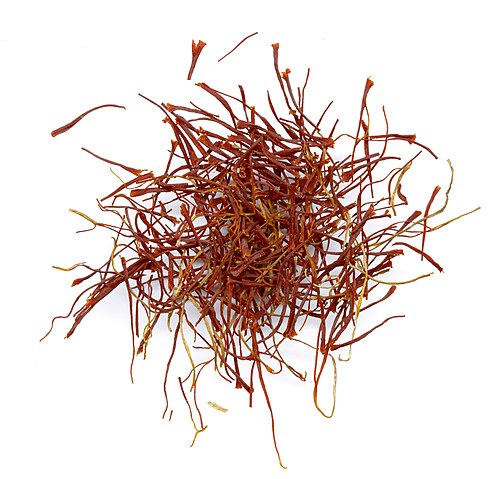
Saffron
Hand-picked stigmas of the Crocus sativus flower, grown mainly in Iran
Those red threads in the tiny jar cost a field of flowers, and once they cost a man his life.
-
c. 16th to 17th century BCE
Akrotiri, Santorini
Bronze Age frescoes at Akrotiri on Santorini, likely painted in the 16th or 17th century BCE, show people gathering saffron crocus. Someone thought the picking worth painting.
en.wikipedia.org -
7th century BCE
Assyria
The saffron crocus appears in a 7th-century BCE Assyrian botanical reference, compiled under King Ashurbanipal.
en.wikipedia.org -
1st century BCE
EgyptLegend
Legend holds that Cleopatra added a quarter cup of saffron to her warm baths, for the color and for her skin. The tale is traditional, not documented.
en.wikipedia.org -
1347 to 1350
Europe
When the Black Death swept Europe from 1347 to 1350, demand for saffron soared.
en.wikipedia.org -
1374
Neu-Falkenstein, Switzerland
In 1374 a nobleman's men robbed merchants of a large saffron shipment. Forces from Basel and Bern laid siege to his castle, in what became known as the Saffron War.
myswitzerland.com -
15th century
Nuremberg, Germany
Nuremberg punished saffron fraud severely. In the 15th century one trader caught adulterating saffron was buried alive along with his fake product.
metmuseum.org -
1540s
Walden, England
Saffron crocus grew so widely around the Essex market town of Walden that by the 1540s it was known as Saffron Walden. The crop faded by the late 1700s. The name stayed.
en.wikipedia.org -
by 1730
Pennsylvania
German Schwenkfelder immigrants carried saffron corms to America in a trunk. By 1730 the Pennsylvania Dutch were growing it widely.
en.wikipedia.org -
Today
Iran
Iran grows around 90 percent of the world's saffron. One kilogram takes about 150,000 crocus flowers, and premium saffron often tops 5,000 US dollars a kilogram. Count the flowers before you count the price.
en.wikipedia.org

Pods and buds
Star Anise
Dried star-shaped fruit of Illicium verum, an evergreen tree of southern China and northern Vietnam
Each point of the star holds a single seed, and for a few years much of the world's flu medicine began with this crop.
-
Song dynasty, 960 to 1279
Guangxi, China
Records from the Song dynasty describe star anise growing widely in Guangxi, where it was valued as a seasoning. Guangxi still grows most of China's crop.
mdpi.com -
c. 1320 to 1430
Off Bakau, Indonesia
Star anise was recovered from ceramic jars on the Bakau shipwreck, dated between 1320 and 1430 CE. It likely came from southern China. The stars kept their shape under the sea for six centuries.
gbif.org -
1505
Ming China
A Ming dynasty materia medica of 1505 described the fruit as the size of a copper coin, with eight prongs and a seed inside each, much used in medicine.
mdpi.com -
by 1588
London, England
By the late 16th century star anise had reached England. One account credits Thomas Cavendish, who returned to London in 1588 from a voyage around the world with stars from the Philippines. Other accounts date it differently.
epices-roellinger.com -
2003
United States
In 2003 the US Food and Drug Administration warned against star anise teas after at least forty people, fifteen of them infants, fell ill. It noted that toxic Japanese star anise resembles the true spice.
nutraingredients.com -
mid-2000s
Basel, Switzerland
In the mid-2000s Roche bought up to 90 percent of the world's star anise for shikimic acid, the starting point of the flu drug Tamiflu. Since 2012 it has relied on engineered bacteria instead.
news.uzh.ch -
today
Lang Son, Vietnam, and Guangxi, China
Vietnam's Lang Son province gives about 30,000 hectares to star anise, its second crop after rice. Most of that harvest is sold to China, the largest exporter. The stars end up in pho and five-spice powder.
news.uzh.ch

Pods and buds
Vanilla
A climbing orchid native to the forests of Mexico and Central America
Nearly all vanilla is still pollinated by a method an enslaved 12-year-old worked out. Remember his name: Edmond Albius.
-
c. 1600 BCE
Megiddo, Canaan (modern Israel)Legend
Disputed: researchers reported vanillin compounds in 3,600-year-old juglets from a Bronze Age tomb. Vanilla experts are skeptical, since olive oil and other plants also contain vanillin.
smithsonianmag.com -
by 1185
Veracruz, Mexico
The Totonac people were among the first to domesticate vanilla, growing it on farms since at least 1185.
en.wikipedia.org -
1427
Central Mexico
The Aztecs invaded Totonac lands and took a liking to vanilla pods. They mixed them with cacao in a drink called xocolatl.
en.wikipedia.org -
1520s
Spain
After the conquest of the Aztecs, Hernán Cortés is credited with bringing both vanilla and chocolate to Europe.
en.wikipedia.org -
1791
Philadelphia, United States
Secretary of State Thomas Jefferson sent to France for 50 vanilla pods, noting they were much used in ice cream. His handwritten recipe survives at the Library of Congress.
smithsonianmag.com -
1841
Sainte-Suzanne, Réunion
Edmond Albius, a 12-year-old enslaved boy, invented a fast way to pollinate vanilla by hand, with a thin stick and a gesture of the thumb. Nearly all vanilla is still pollinated this way.
en.wikipedia.org -
1874
Holzminden, Germany
The chemists Wilhelm Haarmann and Ferdinand Tiemann first synthesized vanillin from coniferin, a compound in conifer sap. They opened a vanillin factory the next year.
chemistryviews.org -
1880
Sainte-Suzanne, Réunion
Albius was freed when France abolished slavery in 1848. He died poor and unrecognized, even as Réunion's vanilla output climbed to about 60 tonnes a year.
europeana.eu -
late 2010s
Madagascar
A cyclone struck Madagascar, which grows roughly three quarters of the world's vanilla. Prices reached about $600 a kilogram, more than silver.
drovers.com

Barks and roots
Cassia
Thick rolled bark of Cinnamomum cassia, an evergreen tree of southern China and the mainland Southeast Asian forests of Burma, Laos and Vietnam
Much of what American shops sell as cinnamon is cassia, a thicker, hotter bark that once went into holy oil and embalmed Egyptians.
-
1st millennium BCE
Ancient Israel
The Book of Exodus gives a recipe for holy anointing oil with 500 shekels of cassia, as much as the myrrh and twice the cinnamon. Which bark the ancient word meant is not certain.
biblegateway.com -
c. 430 BCE
Egypt
Herodotus reports that Egyptian embalmers filled the emptied belly with pure ground myrrh, cassia and other spices, though never frankincense. The dead were packed like a spice chest.
fgh.perseids.org -
c. 430 BCE
ArabiaLegend
Herodotus also tells that cassia grows in a shallow lake guarded by squeaking, bat-like creatures, so gatherers wrap themselves in oxhide up to the eyes. It is a traveler's tale, not fact.
fgh.perseids.org -
by the 4th century BCE
Mediterranean
Cassia was the first cinnamon species to reach Europe, arriving at least by the time of Alexander the Great, carried west from its home in southern China.
gernot-katzers-spice-pages.com -
1st century CE
Rome
Pliny the Elder dismissed the old tales of cinnamon birds and guarded spice groves, saying they were invented to raise the price. A good story was also a markup.
hort.purdue.edu -
c. 2006
Germany
Health concerns rose in Germany when cassia-flavored cookies exceeded limits for coumarin, a compound cassia carries in far greater amounts than Ceylon cinnamon.
gernot-katzers-spice-pages.com -
today
China and Vietnam
Commercial cassia now comes from China and Vietnam. In Chinese kitchens it anchors five-spice powder and red braising, simmered beside star anise.
gernot-katzers-spice-pages.com

Barks and roots
Cinnamon
Inner bark of Cinnamomum trees, true cinnamon from Sri Lanka and cassia from China and Southeast Asia
Smell the stick before you grind it. That bark was a guarded secret, and three empires took turns holding its island.
-
c. 2000 BCE
Egypt
As early as 2000 BCE a cinnamon-like spice reached Egypt and was used in embalming. It may have been a related species, not true cinnamon.
en.wikipedia.org -
Hebrew Bible
Ancient Israel
The Book of Exodus names sweet cinnamon, 250 shekels of it, among the principal spices in the holy anointing oil.
biblegateway.com -
5th century BCE
GreeceLegend
Herodotus repeated a legend of giant birds that built nests of cinnamon sticks on cliffs. Arabians, the story goes, lured them with chunks of meat until the heavy nests fell.
en.wikipedia.org -
65 CE
RomeLegend
Emperor Nero is said to have burned a year's worth of Rome's cinnamon at the funeral of his wife Poppaea Sabina in 65 CE. The story may be exaggerated.
en.wikipedia.org -
1st century CE
Rome
Pliny the Elder recorded that a Roman pound of cinnamon could cost up to 1,500 denarii, about fifty months of a laborer's wages. Fifty months of work for a pound of bark.
en.wikipedia.org -
1505
Ceylon (Sri Lanka)
In 1505 Portuguese ships under Lourenço de Almeida reached Ceylon by chance. Portugal soon reached for the island's valuable cinnamon.
en.wikipedia.org -
1638 to 1658
Ceylon (Sri Lanka)
Dutch traders set up a post in Ceylon in 1638. By 1640 they had taken over cinnamon production, and by 1658 they had expelled the last Portuguese.
en.wikipedia.org -
1796
Ceylon (Sri Lanka)
The British seized Ceylon from the Dutch in 1796. Empires came and went; the bark stayed. Sri Lanka still produces 80 to 90 percent of the world's true cinnamon.
en.wikipedia.org -
2023
Worldwide
In 2023 the world produced about 238,000 tonnes of cinnamon. China led with 39 percent, mostly the cassia type found on many supermarket shelves.
en.wikipedia.org

Barks and roots
Galangal
Rhizome of Alpinia galanga (greater galangal) of Java and Southeast Asia, and of its cousin Alpinia officinarum (lesser galangal) of southern China, the galangal of medieval Europe
Medieval cooks in England and France bought this root as a luxury, then Europe forgot it until Thai kitchens taught it again.
-
c. 870
Abbasid Caliphate
The Arab geographer Ibn Khurdadbih listed galangal among the goods of the far East, beside musk, aloeswood and camphor. The name likely began in Chinese as Gaoliang ginger.
henriettes-herb.com -
12th century
Bingen, Rhineland
Hildegard, abbess of Bingen, who died in 1179, wrote of galangal under the name galgan and set out its medicinal virtues. A root from the far side of Asia had reached a Rhineland convent.
henriettes-herb.com -
1359 to 1360
France
The expense journal of King John of France for 1359 to 1360 records three purchases of galangal. A century later, physicians counted it among the necessary stock of an apothecary's shop.
henriettes-herb.com -
c. 1390
England
The Forme of Cury, compiled about 1390 by the master cooks of Richard II, seasons lampreys with powdered ginger, galyngale, cinnamon and cloves.
foodsofengland.info -
1870
Hainan, China
Southern China exported hundreds of thousands of pounds of the root, yet Europe had long confused its source. Specimens gathered on Hainan in January 1870 finally fixed the true plant as Alpinia officinarum.
henriettes-herb.com -
20th century
American SouthLegend
In hoodoo folk magic galangal is Little John to Chew. The instruction is to chew it and spit the juice on the courtroom floor before the judge enters, and the case will go your way. It is believed, not proven.
americanbluesscene.com -
today
Thailand and Indonesia
Greater galangal now flavors Thai tom yum and tom kha gai and Indonesian soto and opor. In Poland galangal still flavors Żołądkowa Gorzka vodka, a last trace of the old European taste.
en.wikipedia.org

Barks and roots
Ginger
A rhizome first domesticated in Maritime Southeast Asia
That knobbed root in your crisper was traveling long before most spices left home: by canoe, by ship, by caravan.
-
c. 3000 BCE
Maritime Southeast Asia
The oldest evidence of ginger domestication comes from Austronesian peoples about 5,000 years ago. They carried it by canoe across the Indo-Pacific.
en.wikipedia.org -
2600 to 2200 BCE
Farmana, Haryana, India
Starch grains of ginger and turmeric recovered from a Harappan cooking pot show both were being cooked more than 4,000 years ago.
antiquity.ac.uk -
c. 5th century BCE
-
1st century CE
Roman Empire
Trade carried ginger to the Mediterranean, and the writers Dioscorides and Pliny the Elder both described it.
en.wikipedia.org -
406 CE
Chinese sea routes
The traveling monk Faxian recorded ginger grown in pots aboard Chinese ships. A garden, going to sea.
en.wikipedia.org -
14th century
England
In 14th-century England a pound of ginger could cost as much as a whole sheep. It was a luxury for the wealthy.
johnogroat-journal.co.uk -
16th century
Hispaniola and Puerto Rico
With encouragement from the Spanish Crown, ginger came from Asia to the Caribbean and became the leading export of Hispaniola and Puerto Rico, until sugar overtook it.
en.wikipedia.org -
late 16th century
England
Elizabeth I kept a royal gingerbread maker. At one banquet, gingerbread figures were made to stand for foreign dignitaries and courtiers.
time.com -
2023
India
In 2023 India grew about 2.2 million tonnes of ginger, roughly 45 percent of the world's supply. Nigeria and China came next.
en.wikipedia.org

Barks and roots
Licorice Root
Dried root of Glycyrrhiza glabra and related species, perennial legumes of southern Europe and western and central Asia
The black sweet in the cinema began as a woody root in a pharaoh's tomb and an ancient Chinese list of harmless cures.
-
14th century BCE
Valley of the Kings, Egypt
Licorice root is widely reported among the goods buried with Tutankhamun, who ruled Egypt in the 14th century BCE. Sweetness went with him into the dark.
gastropod.com -
1st to 2nd century CE
Han dynasty China
The Shennong Bencaojing, compiled in the Eastern Han dynasty, lists licorice root among its 120 upper drugs, the ones judged harmless. Chinese doctors still call it gancao, sweet herb.
en.wikipedia.org -
medieval
Pontefract, YorkshireLegend
Pontefract tells two stories of how licorice arrived, carried home by knights from the Crusades or planted by Dominican monks at the priory. Neither is confirmed.
museumsandcastles.wakefield.gov.uk -
1614
Pontefract, Yorkshire
From 1614 Pontefract pressed licorice juice into small round lozenges for coughs and stomach complaints, stamped to show they came from the town. The stamp became the brand.
yorkshireeveningpost.co.uk -
1760
Pontefract, Yorkshire
The apothecary George Dunhill is credited with adding sugar to licorice extract in 1760, turning a medicine into a sweet.
museumsandcastles.wakefield.gov.uk -
1966
Pontefract, Yorkshire
In 1966 the last licorice roots were lifted at Pontefract, ending more than three centuries of growing there. The factories stayed, the fields did not.
yorkshireeveningpost.co.uk -
today
Turkey, Greece, Iran and Iraq
Most licorice root now comes from Turkey, Greece, Iran and Iraq. Besides sweets, the extract flavors tobacco, drinks and medicines.
en.wikipedia.org

Barks and roots
Turmeric
A ginger-family rhizome from South and Southeast Asia
Rub a little between your fingers and the yellow stays. Dye, medicine, ritual and, lately, fraud all followed that color.
-
c. 3000 BCE onward
Taiwan to the Pacific
Austronesian voyagers carried turmeric across the Pacific for food, dye and ritual. It traveled as far as Hawaii and Easter Island.
en.wikipedia.org -
2600 to 2200 BCE
Farmana, Haryana, India
Turmeric starch from a Harappan cooking pot is among the earliest direct evidence of the spice in a kitchen.
antiquity.ac.uk -
2nd millennium BCE
Megiddo, Canaan (modern Israel)
Turmeric was found in the tomb of a merchant at Megiddo, a sign of long-distance trade far from where it grew.
en.wikipedia.org -
7th century BCE
Nineveh, Assyria
Turmeric appears in Assyrian cuneiform medical texts from the library of King Ashurbanipal.
en.wikipedia.org -
c. 1280
China
Around 1280 Marco Polo described a plant with the smell and color of true saffron that was not saffron. Medieval Europeans called turmeric Indian saffron.
madrascourier.com -
1980s
Bangladesh
In the 1980s, after floods left crops dull, some processors began adding lead chromate, an industrial yellow pigment, to make turmeric look brighter.
news.stanford.edu -
1997
Washington, D.C.
In 1997 India persuaded the US Patent Office to revoke a 1995 patent on using turmeric to heal wounds. It was a landmark case for traditional knowledge.
nature.com -
2019
Bangladesh
In 2019 a Stanford-led study identified lead-laced turmeric as a likely source of elevated blood lead in Bangladeshi pregnant women.
news.stanford.edu -
2021
Bangladesh
After public warnings and enforcement, market turmeric samples with detectable lead fell from 47 percent in 2019 to zero. The yellow came back honest.
gsb.stanford.edu

Leaves
Bay Leaf
Dried leaf of Laurus nobilis, the bay laurel, an evergreen tree native to the Mediterranean region
The leaf you fish out of the soup and throw away once crowned the victors at Delphi and a poet on the Capitoline Hill.
-
7th century BCE
Ashkelon, Levant coast
Early evidence of people using bay laurel comes from Ashkelon, on the coast of modern Israel, dated to the 7th century BCE. The tree itself is a survivor of laurel forests that once covered much of the Mediterranean.
en.wikipedia.org -
582 BCE
Delphi, Greece
From 582 BCE the Pythian Games at Delphi became crown games. Winners got no money, only a wreath of bay laurel, sacred to Apollo, cut in the Vale of Tempe in Thessaly. Glory, it turned out, was a leaf.
en.wikipedia.org -
Classical era
Delphi, GreeceLegend
The satirist Lucian, writing centuries later, told that Apollo's priestess chewed laurel leaves from the sacred tree before she prophesied. It is a story handed down, not a proven rite.
en.wikipedia.org -
8 CE
RomeLegend
Ovid's Metamorphoses, first written in 8 CE, tells how the nymph Daphne, fleeing Apollo, was turned into a laurel. The god vowed to wear her leaves forever. It is myth, not history.
en.wikipedia.org -
14 to 37 CE
Rome
Roman sources say Emperor Tiberius put on a laurel wreath during thunderstorms, trusting the tree to turn lightning away. An emperor sheltered under a leaf.
en.wikipedia.org -
1341
Capitoline Hill, Rome
On 8 April 1341 Petrarch was crowned with laurel on the Capitoline Hill, the second poet laureate since antiquity. The word laureate still carries the leaf.
en.wikipedia.org -
today
Turkey
Turkey is the world's largest producer and exporter of bay leaves. The tree is also grown in the southern United States, Central America, the Middle East and Asia.
mccormickscienceinstitute.com

Leaves
Curry Leaf
Leaf of Murraya koenigii (now Bergera koenigii), a small citrus-family tree of the Indian subcontinent
Tamil poets were tossing curry leaves into butter nearly two thousand years ago, and the word curry itself probably comes from Tamil.
-
1st to 4th century CE
Kanchipuram, Tamil country
A Sangam-era Tamil poem, the Perumpanatruppadai, promises travellers pomegranate cooked in warm butter with fresh curry leaves and black pepper. The recipe survived because a poet thought it worth singing.
thenewsminute.com -
16th century
Karnataka, India
Kannada texts of the 16th century describe an unfried brinjal bhaji with coconut shreds, curry leaves and cardamom, finished with citrus juice and a little camphor.
downtoearth.org.in -
1767
Sweden
Carl Linnaeus published the species in 1767 and named it koenigii for the botanist Johann Gerhard König. A leaf every Tamil cook knew got a German name in a Swedish book.
en.wikipedia.org -
early 1900s
Fiji
Indian migrants carried curry leaf seeds abroad. One family's grandfather brought seeds from India to Fiji in the early 1900s, and his grandson carried them on to Los Angeles in 1980.
civileats.com -
20th century
Tirunelveli, Tamil NaduLegend
In Tirunelveli it was said to be unlucky to refuse the free bunch of curry leaves at the market. One writer suspects vegetable sellers invented the belief. It is told, not proven.
thenewsminute.com -
2012
Los Angeles, California
Curry leaf trees can host the insect that spreads citrus greening, so the United States quarantines them. In March 2012 inspectors ordered a California grower to destroy all 5,000 of his trees.
civileats.com -
today
India
In the Indian subcontinent the tree is a fixture in almost every household. Commercial plantations grow it in India, Australia and on Spain's Costa del Sol.
en.wikipedia.org

Leaves
Makrut Lime Leaf
Double-lobed leaf of Citrus hystrix, a thorny, warty-fruited citrus naturalized across Southeast Asia, Sri Lanka and Burma; its exact origin is unknown
Before it scented a single curry, this lime was used to wash hair, scare off leeches and, some say, spirits.
-
1741
Ambon, Maluku Islands
The earliest known record is a drawing made for the naturalist Rumphius of a limau purut tree grown on Ambon. His Herbarium Amboinense, published in 1741, notes such limes used for washing and shampooing.
nparks.gov.sg -
1868
Ceylon (Sri Lanka)
A record from Ceylon in 1868 mentions the fruit used against leeches. Later surveys found its chief use was washing the head and treating the feet to kill land leeches.
en.wikipedia.org -
1888
India and Ceylon
Emanuel Bonavia's 1888 book on the citrus of India and Ceylon gives the earliest known use of the old English name, noting that Europeans called it the Caffre lime.
en.wikipedia.org -
folk custom
Southeast AsiaLegend
In some Southeast Asian households, water steeped with makrut leaves is sprinkled on family members home from a cemetery, said to scare off lingering spirits. The power is believed, not proven.
specialtyproduce.com -
2011
California, United States
A 2011 petition to the USDA found only one certified organic California grower, harvesting about 50 pounds of leaves a year. Quarantines against the Asian citrus psyllid keep the trees scarce.
ams.usda.gov -
2021
United Kingdom
In June 2021 Waitrose said it would relabel its lime leaves as makrut, because the old name had historically been a racial slur in South Africa. Makrut is the Thai name. A leaf got its own name back.
packagingscotland.com

Fruits, sours and resins
Amchur
dried green mango
Unripe green mangoes (Mangifera indica), peeled, thinly sliced, sun-dried and usually ground, made chiefly in India
That beige powder is a green mango, peeled, sliced and dried in the sun, a summer's sourness saved for the rest of the year.
-
by c. 2000 BCE
Indian subcontinent
Mango trees have been cultivated in India for some 4,000 to 6,000 years, which makes the mango one of the oldest tended fruits in the world.
phytojournal.com -
5th century BCE (legend)
Shravasti, northern IndiaLegend
Buddhist tradition tells that a gardener at Shravasti gave the Buddha the last mango in town. He ate it, planted the stone, and a full tree rose at once. Told, not proven.
en.wikipedia.org -
7th century CE
India
The Chinese pilgrim Xuanzang, who traveled through India in the 7th century, appears to have been the first to bring the mango to the notice of people outside India.
phytojournal.com -
late 1520s
Hindustan, Mughal India
Babur, the first Mughal emperor, wrote in his memoirs that mangoes were usually picked unripe, and that unripe they made excellent condiments. The green fruit was already a seasoning.
madrascourier.com -
2024
Nandurbar, Maharashtra, India
On 30 March 2024 Nandurbar Amchur won India's GI tag. Tribal growers make it from a local wild mango, gaauti aam, peeled, sliced, sun-dried and pounded, as they have for generations.
en.wikipedia.org -
today
India
Amchur sours food without adding moisture, tenderizes meat in marinades, and is a main part of chaat masala. A dry powder does the work of a wet fruit.
en.wikipedia.org

Fruits, sours and resins
Anardana
dried pomegranate seed
Seeds and clinging pulp of sour pomegranates (Punica granatum), often wild Himalayan fruit, dried into dark sticky clumps
Those sticky brown clumps are pomegranate seeds dried whole, the fruit that bound Persephone to the underworld, now souring chutneys and curries.
-
c. 3300 BCE
Tell es-Sultan (Jericho), West Bank
Carbonized pomegranate skin found at Tell es-Sultan dates to about 3300 BCE, early Bronze Age evidence that people were keeping the fruit.
mq.edu.au -
c. 3000 BCE
Iranian plateau
Pomegranates were domesticated on the Iranian plateau about 5,000 years ago and spread across Asia and Africa. The spice still carries its Persian name, anar, pomegranate, and dana, seed.
en.wikipedia.org -
c. 14th century BCE
Uluburun, off southern Turkey
The Uluburun ship, wrecked off the Turkish coast in the Late Bronze Age, carried pomegranates among its cargo. Even then the fruit was worth a sea voyage.
en.wikipedia.org -
c. 7th century BCE
GreeceLegend
The Homeric Hymn to Demeter tells how Hades slipped Persephone a pomegranate seed, binding her to the underworld for part of every year. A myth, told, not proven. A single seed was enough.
diotima-doctafemina.org -
10th century
Baghdad
A 10th-century Baghdad recipe for sibagh, a dipping sauce, calls for pomegranate seeds with raisins, pepper and cumin.
eatlikeasultan.com -
today
Himalayas, India and Pakistan
Seeds of daru, a wild Himalayan pomegranate, are counted the best anardana for Indian and Pakistani cooking. The fruit too sour to eat makes the finest spice.
en.wikipedia.org

Fruits, sours and resins
Asafoetida
Dried gum resin tapped from the roots of Ferula assa-foetida, a giant fennel of Iran and Afghanistan
Alexander's soldiers mistook this foul-smelling resin for a lost ancient luxury, and India has been cooking with it ever since.
-
328 or 327 BCE
Hindu Kush, Afghanistan
Alexander's soldiers found asafoetida beyond the Hindu Kush in 328 or 327 BCE and took it for silphium, the prized resin of Cyrene. They used it to help digest raw horse meat.
oxfordsymposium.org.uk -
1st century CE
Roman Empire
Dioscorides recorded the Persian resin as a stand-in for true silphium, weaker in power and with a nastier smell. The real thing was disappearing, and the substitute stayed.
en.wikipedia.org -
12th century
Western Chalukya court, southern India
The 12th-century Sanskrit encyclopedia Manasollasa gives a recipe for fish seasoned with asafoetida, cardamom, salt and pepper.
oxfordsymposium.org.uk -
16th century
Goa, India
The Portuguese physician Garcia de Orta reported that all the Hindus who could afford it bought asafoetida for their food, and that rich Brahmins and vegetarians ate a great deal.
oxfordsymposium.org.uk -
19th century
Calcutta (Kolkata), India
Afghan merchants, the Kabuliwalas, sold hing door to door in 19th-century Calcutta. Their trade inspired the founding of Laljee Godhoo and Co., still a familiar Indian brand.
oxfordsymposium.org.uk -
late 19th to early 20th century
United StatesLegend
American children once wore small asafetida bags around their necks, believed to ward off disease and evil spirits. The protection is told, not proven. The smell may at least have kept others away.
sdstate.edu -
2020
Lahaul valley, Himachal Pradesh
India imports about 1,200 tonnes of raw asafoetida a year from Iran, Afghanistan and Uzbekistan. In 2020 scientists began India's first cultivation at Kwaring village in the cold desert of Lahaul.
theweek.in

Fruits, sours and resins
Dried Lime
loomi black lime
Small acid limes (Citrus aurantifolia) blanched in salt water and dried until hard and dark, a method first developed in Oman
That hollow black ball rattling in the jar was once a green lime, salted and dried in the Omani sun until it tasted of earth and smoke.
-
10th century
Arabian trade routes
Limes are native to the region running from India to Southeast Asia. Arab traders are believed to have carried them west to North Africa and the eastern Mediterranean in the 10th century.
specialtyproduce.com -
medieval legend
OmanLegend
Omani tradition says Sinbad the Sailor carried sun-dried limes on his voyages and that they helped him succeed. Sinbad is a story, so this is told, not proven. A sailor wants fruit that keeps.
apsnet.org -
1971
Batinah coast, Oman
In 1971 Oman's lime exports were worth 333,300 rials, nearly triple the value of its dates. Limes had become the country's most valuable export after oil.
apsnet.org -
late 1970s
Batinah coast, Oman
Witches' broom disease appeared in the Batinah's lime groves in the late 1970s. By 1986 some orchards were completely destroyed and farmers were planting bananas instead.
apsnet.org -
today
Oman and the Gulf
Black limes are made by blanching fresh limes in salt water and drying them until rock hard, traditionally on banana-leaf mats in the sun. They keep for years.
finedininglovers.com -
today
Iran, Iraq and the Gulf
Persian cooks put dried limes in stews and soups. In Iraq, where they are called noomi Basra, they go into nearly every dish and into tea. Gulf cooks pair them with fish.
en.wikipedia.org

Fruits, sours and resins
Kokum
Dried rind of the dark purple fruit of Garcinia indica, a tree endemic to the Western Ghats and the Konkan coast of India
That leathery purple rind turns coconut milk pink and fish curry sour, the Konkan coast's answer to tamarind and its drink against the summer sun.
-
early centuries CE
India
The Charaka Samhita, a founding text of Ayurveda, lists a fruit called vrikshamla, the tree sour, a name Ayurvedic practitioners now give to kokum.
sdach.ac.in -
16th century
India
The Bhavaprakasha places vrikshamla among the chaturamla and panchamla, Ayurveda's sets of four and five sour fruits, and calls it sour and heating. Sourness had its own shelf.
sdach.ac.in -
1806
France
The French botanist Aubert du Petit-Thouars described the tree in 1806 as Brindonia indica. Jacques Denys Choisy moved it to the genus Garcinia in 1823.
en.wikipedia.org -
2016
Sindhudurg and Ratnagiri, Maharashtra, India
On 31 March 2016 Sindhudurg and Ratnagiri Kokum, from Maharashtra's Konkan coast, became the first kokum from India to earn a GI tag.
en.wikipedia.org -
today
Western coast of IndiaLegend
Along the coast, kokum soaked in sugar syrup, amrit kokum, is drunk to ward off sunstroke. A folk remedy, told, not proven. The hottest months call for the sourest fruit.
downtoearth.org.in -
today
Konkan, Goa and coastal Karnataka
Konkani, Goan and Maharashtrian cooks use kokum in place of tamarind in coconut curries and fish, and in solkadhi, made with coconut milk. Its seeds give kokum butter for chocolate and cosmetics.
en.wikipedia.org

Fruits, sours and resins
Sumac
Dried, crushed red berries of Rhus coriaria, a shrub of the Mediterranean, Turkey and Iran
Romans were souring their food with these red berries long before the lemon arrived, and the name itself means red.
-
1st century CE
Rome
In classical Rome, before the lemon was introduced, cooks used sumac's acid fruit to make food sour. The berry did the lemon's job first.
app.ckbk.com -
c. 77 CE
Rome
Pliny the Elder wrote that the tree called rhus had no Latin name though it was used in many ways, including by curriers to treat leather.
gutenberg.org -
c. 800
BaghdadLegend
A sumac stew called haruniyya was attributed to Caliph Harun al-Rashid and said to be his favorite. The royal taste is told, not proven.
en.wikipedia.org -
9th to 11th century
Sicily
Arab cultivators brought sumac to Sicily between the 9th and 11th centuries, turning a wild eastern shrub into a crop. The name comes from Arabic summaq, dark red.
italoamericano.org -
10th century
Baghdad
Ibn Sayyar al-Warraq's 10th-century Baghdad cookbook gave a whole section to summaqiyyat, dishes soured with sumac. The family of dishes later travelled to Syria, al-Andalus and Europe.
en.wikipedia.org -
1899
Palermo, Sicily
In the 1800s Sicilian sumac, sold to tanners and dyers, ranked second only to wheat among the island's exports. In 1899 the Florio family founded a company to ship it abroad. Synthetic tannins later ended the trade.
italoamericano.org -
today
Gaziantep, Turkey
Much sumac now comes from around Gaziantep in Turkey, salt-cured and crushed. It goes into za'atar and onto kebabs, rice and salads, a sour red dust where lemons once were rare.
thespicehouse.com

Fruits, sours and resins
Tamarind
Sticky sour pulp from the pods of Tamarindus indica, a tree native to the dry savannas of tropical Africa, long grown in India and across the tropics
The brown block in your pantry is an African fruit the Arabs named the Indian date, and it is hiding in your Worcestershire sauce.
-
c. 1200 to 200 BCE
India
Sanskrit texts dated to between about 1200 and 200 BCE mention the tamarind tree. An African tree had already become an Indian one.
saveur.com -
Ramayana legend
IndiaLegend
A legend tells that Rama sheltered under a tamarind in exile and, finding its broad leaves poor for penance, had Lakshmana shoot them into small pieces. Told, not proven, it explains the tiny leaflets.
penguin.co.in -
c. 1025
Persia
Ibn Sina recorded tamarind in his Canon of Medicine as tamar hindi, the Indian date, and used it as a laxative and for fever. English still says his word.
ahpa.org -
16th century
Mexico and Central America
Spanish and Portuguese colonists brought tamarind to Mexico and Central America in the 16th century, where it became a staple of the cooking. The Indian date crossed a second ocean.
en.wikipedia.org -
1563
Goa, India
In Goa in 1563 the Portuguese physician Garcia de Orta gave tamarind an admiring chapter of its own in his Colloquies on the Simples and Drugs of India, praising it as a digestive and purgative.
saveur.com -
1837
Worcester, England
Lea and Perrins first sold Worcestershire sauce commercially in 1837. Tamarind extract is listed among its ingredients, a southern sourness in an English bottle.
en.wikipedia.org -
today
India
India grows the most tamarind in the world. Its orchards were producing about 250,000 tonnes a year by the late 20th century.
en.wikipedia.org

Salt and sugar
Salt
Evaporated seawater, salt lakes, brine springs and rock salt mines worldwide
The white grain you scatter without thinking was once mined, boiled, taxed and marched for. Pinch it slowly.
-
c. 6000 BCE
Poiana Slatinei, Lunca, Romania
Archaeologists have found early Neolithic salt making at Poiana Slatinei in Romania, dated to roughly 6000 BCE. It is among the oldest known anywhere.
en.wikipedia.org -
c. 2000 BCE
Zhongba, central China
At Zhongba in central China, people boiled brine in large vats with pointed bottoms from about 2000 BCE. The work went on for nearly two thousand years.
sciencenews.org -
8th to 5th century BCE
Hallstatt, Austria
Prehistoric miners dug salt at Hallstatt from the 8th to the 5th century BCE. The salt kept what they left behind: cloth, wood, leather. Salt keeps what it touches. The mine is still worked today.
en.wikipedia.org -
119 BCE
Han dynasty China
In 119 BCE Emperor Wu of Han made salt and iron state monopolies. In the late Tang dynasty, salt alone brought in more than half the government's yearly revenue.
en.wikipedia.org -
Roman era
RomeLegend
The story goes that Roman soldiers were paid in salt. The word salary does come from Latin salarium, linked to sal, salt. The story itself is unsupported, and even a salt-buying allowance is not well established.
en.wikipedia.org -
1341
France
In 1341 King Philip VI made the gabelle, the salt tax, permanent. Adults were forced to buy salt every week. The hated tax lasted, with interruptions, until 1945.
en.wikipedia.org -
1352
Taghaza, Sahara
In 1352 Ibn Battuta came to the Saharan mine of Taghaza, where houses were built of salt slabs and roofed with camel skins. On the road to Mali's capital, salt rose fourfold in value.
en.wikipedia.org -
12 March to 6 April 1930
Sabarmati to Dandi, India
Gandhi and 78 followers walked 387 km against Britain's salt tax and monopoly. On 6 April 1930 he lifted salty mud at Dandi. Over 60,000 people were later arrested.
en.wikipedia.org -
2017
China
In January 2017 China's centuries-old salt monopoly finally loosened. Producers could sell straight to the people who use it, though prices stayed under watch.
en.wikipedia.org

Salt and sugar
Sugar
Sugarcane from New Guinea, later refined in India, and sugar beet from Europe
The spoonful in your cup was once rare medicine. Millions of enslaved Africans were forced to make it cheap.
-
c. 4000 BCE
New Guinea
Papuan farmers in New Guinea selectively bred the sugarcane Saccharum officinarum from a wild native relative.
en.wikipedia.org -
325 BCE
India
Nearchus, an admiral of Alexander the Great, learned of sugarcane during the campaign in India and recorded it for Greek readers.
en.wikipedia.org -
c. 350 CE
India
People in India learned to turn cane juice into granulated crystals called khanda, easy to store and to trade. Our word sugar comes from Sanskrit śarkarā.
en.wikipedia.org -
12th century
Tyre and Venice
Crusaders brought sugar back to Europe, and Venice set up cane production near Tyre. By the 15th century Venice was Europe's chief refining center.
en.wikipedia.org -
1493
Hispaniola
Christopher Columbus carried sugarcane to Hispaniola on his second voyage. The first harvest there came in 1501.
en.wikipedia.org -
1640s
Barbados
Sugar production began in Barbados, worked by enslaved Africans who endured lifelong abuse. The Barbados plantation model then spread across the Americas.
whc.unesco.org -
1791
Great Britain
William Fox's pamphlet urged Britons to refuse slave-grown West India sugar. More than 200,000 copies circulated, fueling a consumer boycott.
brycchancarey.com -
1801 to 1813
Silesia and France
The first beet sugar factory opened in Cunern, Silesia, in 1801. In 1813 Napoleon banned sugar imports and ordered 32,000 hectares planted with beets.
en.wikipedia.org -
2022 to 2023
Worldwide
World sugar production reached 186 million tonnes. Brazil and India together grow more than 60 percent of the world's sugarcane.
en.wikipedia.org

Dried herbs
Oregano
Dried leaves of Origanum vulgare and its close kin, perennial herbs of the mint family native to the Mediterranean and western Eurasia
The pizza herb has a name that may mean joy of the mountain, and a goddess who supposedly planted it for happiness.
-
classical Greece
Greece
The name oregano comes through Latin from Greek origanon, which some scholars read as mountain and joy. The Oxford English Dictionary calls it probably a loanword from Africa. The joy is disputed.
en.wikipedia.org -
ancient Greece
Mount Olympus, GreeceLegend
Greek myth says the goddess Aphrodite made oregano as a symbol of happiness and planted it in her garden on Mount Olympus. It is a story told, not proven. A goddess gardened for joy.
en.wikipedia.org -
5th to 4th century BCE
Greece
The physician Hippocrates used oregano as an antiseptic and for the chest. Greeks also set it into marriage ceremonies for joy and funeral rites for peace.
mccormickscienceinstitute.com -
Middle Ages
Europe
Medieval Europeans took oregano for rheumatism, toothache, indigestion and cough. The kitchen herb sat in the medicine chest first.
mccormickscienceinstitute.com -
after World War II
United States
American soldiers returning from the European theater of World War II brought home a taste for the pizza herb, which had probably been eaten in southern Italy for centuries.
en.wikipedia.org -
today
Turkey, Morocco and Albania
Turkey, Morocco and Albania lead world oregano exports. Mexican oregano, Lippia graveolens, is a different plant grown in Mexico, Central America and the southwestern United States, and it shares only the name.
mccormickscienceinstitute.com

Dried herbs
Thyme
Dried leaves of Thymus vulgaris, a low aromatic shrub of the mint family native to the western Mediterranean
Greek temples burned it, medieval ladies gave it to knights, and both ages believed this low grey herb could put courage into a person.
-
ancient Egypt
Egypt
Ancient Egyptians used common thyme in embalming, though sources give no firm date. The herb went with the dead before it went into soups.
en.wikipedia.org -
classical Greece
Greece
The Greeks used thyme in bathing and burned it as incense in their temples. They took it as a sign of courage.
en.wikipedia.org -
1st century CE
Roman Empire
The first recorded evidence of thyme as medicine dates to the first century CE, in Dioscorides' De materia medica and Pliny's Natural History.
mccormickscienceinstitute.com -
Middle Ages
EuropeLegend
Tradition says noble ladies gave knights sprigs of thyme or thyme-embroidered scarves before tournaments, to lend them courage. It is a custom told, not proven. The courage was in the sprig, or in the lady.
britannica.com -
19th century
Europe and North America
By the 19th century dental practice used components of thyme oil against oral infections and inflammation. Britannica still lists perfumes and dentifrices among the herb's uses beyond the kitchen.
mccormickscienceinstitute.com -
today
India, Turkey and Peru
India, Turkey and Peru are the leading suppliers of thyme to world markets. Because the plant grows so low, much of the crop is picked by hand before it is dried.
mccormickscienceinstitute.com

Dried herbs
Rosemary
Needle-like leaves of Salvia rosmarinus, formerly Rosmarinus officinalis, a woody evergreen shrub native to the Mediterranean region
The Latin name means dew of the sea, and in 2017 botanists quietly moved rosemary into the sage genus.
-
1st century CE
Roman Empire
Pliny the Elder and Dioscorides both wrote of rosemary, and Dioscorides' De materia medica became one of the most influential herbal books in history. Greeks and Romans held the plant sacred.
en.wikipedia.org -
as early as 220 CE
China
Rosemary was naturalized in China as early as 220 CE, during the late Han dynasty. A Mediterranean shrub was already growing in Chinese soil.
en.wikipedia.org -
1338 or 1342
Westminster, England
Joan of Hainault sent rosemary cuttings to her daughter, Queen Philippa of England, to be planted at Westminster Palace. Sources date the gift to 1338 or 1342. A mother posted a shrub across the sea.
en.wikipedia.org -
c. 1370
HungaryLegend
Hungary water, an early European alcohol perfume made mainly from distilled rosemary, is dated to about 1370. The tale of a queen and a hermit's gift appears only in the 17th century, so it is told, not proven.
en.wikipedia.org -
c. 1600
England
In Shakespeare's Hamlet, Ophelia says, "There's rosemary, that's for remembrance. Pray you, love, remember." By then the herb already stood beside burials and promises.
en.wikipedia.org -
2017
Worldwide
In 2017, on molecular evidence, rosemary was reclassified into the genus Salvia, reviving a proposal from 1835. The herb on the roast potatoes is, strictly, a sage.
en.wikipedia.org

Dried herbs
Sage
Dried leaves of Salvia officinalis, a silvery perennial shrub of the mint family native to the northern Mediterranean
Its Latin name means to save, and a medieval poem asked why anyone should die who has sage growing in the garden.
-
4th century BCE
Greece
Theophrastus, the Greek botanist, knew sage under the name elelisphakon. Dioscorides later recommended it as a diuretic and a herb for wounds.
blog.metmuseum.org -
1st century CE
Rome
Pliny the Elder recorded sage as a diuretic, a local anesthetic and a styptic. The Romans called it the holy herb and used it in religious rites.
en.wikipedia.org -
9th century
Lake Constance region
In his poem Hortulus, the Benedictine abbot Walafrid Strabo ranked sage first among the herbs of his monastery garden and called it rich in virtue. The garden began with sage.
blog.metmuseum.org -
Middle Ages
Salerno, Italy
A medieval health poem tied to the school of Salerno asks, Cur moriatur homo cui salvia crescit in horto, why should a man die who has sage in his garden. The name salvia comes from salvere, to save.
blog.metmuseum.org -
1393
Paris, France
Le Menagier de Paris, a household guide written in 1393, recommends sage soup and sage sauce. Sage was already a kitchen herb in the city, not only a medicine.
en.wikipedia.org -
17th century
ChinaLegend
It is told that in the 17th century the Chinese valued European sage so highly that traders got three or four pounds of tea for one pound of leaf. The exchange rate is repeated, not proven.
mccormickscienceinstitute.com -
today
Turkey, Russia and southeastern Europe
Turkey, Russia and southeastern Europe are the principal sage producers. Sage and onion stuffing is the traditional partner of roast poultry at British Christmas and American Thanksgiving tables.
mccormickscienceinstitute.com

Dried herbs
Marjoram
Dried leaves of Origanum majorana, a tender perennial of the mint family indigenous to Cyprus, Turkey, the Levant and the wider Mediterranean
Greeks and Romans took marjoram as a herb of happiness, and Cyprus told of a royal perfumer who turned into it.
-
ancient Egypt, undated
Egypt
Ancient Egyptians decorated mummies with wreaths of marjoram, according to a University of California, Davis, food geography page. It gives no date. A sweet herb kept company with the dead.
nutritionalgeography.faculty.ucdavis.edu -
ancient Greece
CyprusLegend
Greek myth says Amaracus, the royal perfumer of Cyprus, was transformed into marjoram, and that Aphrodite made the plant. These are tales told, not proven. A perfumer became a scent.
en.wikipedia.org -
5th to 4th century BCE
Greece and Rome
Hippocrates used marjoram as an antiseptic. Greeks and Romans took it as a symbol of happiness, and the Romans called it the herb of happiness.
en.wikipedia.org -
1st century CE
Roman Empire
Pedanius Dioscorides described marjoram in De materia medica. Romans also believed the herb could lengthen life.
en.wikipedia.org -
Middle Ages
British Isles
Marjoram may have spread to the British Isles during the Middle Ages, far north of its native Mediterranean and Levantine range. A warm-country herb learned the cold.
en.wikipedia.org -
after World War II
United States
Marjoram came into wide use in the United States only after World War II. A herb as old as Cyprus is, in American kitchens, a postwar arrival.
en.wikipedia.org

Dried herbs
Dried Mint
Leaves of Mentha species, perennial herbs of the mint family native to southern Europe and the Mediterranean, dried for tea, sauces and spice blends
A nymph who caught a god's eye became the first mint, and for centuries people strewed her on floors to make a room smell kind.
-
ancient Greece
GreeceLegend
In Greek myth the nymph Minthe, beloved by Hades, was changed into a mint plant by Persephone or Demeter. It is a story told, not proven. Jealousy, in this telling, smells cool.
en.wikipedia.org -
ancient Greece
Greece
The ancient Greeks rubbed mint on their arms, believing it would make them stronger.
en.wikipedia.org -
early European use
Europe
One of mint's first known uses in Europe was as a room deodorizer. It was strewn across floors, and each step released more of the scent.
en.wikipedia.org -
Middle Ages
EuropeLegend
Throughout the Middle Ages mint was thought able to cure speech disorders, especially a lisp. The belief was held, not proven.
nutritionalgeography.faculty.ucdavis.edu -
1696
Hertfordshire, England
John Ray published the discovery of peppermint in Hertfordshire in 1696. Peppermint, a hybrid, is a late arrival among the mints.
en.wikipedia.org -
1721 to 1753
London, England
Peppermint was added to the London Pharmacopoeia in 1721. In 1753 Carl Linnaeus gave it the name Mentha piperita in his Species Plantarum.
en.wikipedia.org -
2020
Oregon and Washington, United States
As of 2020 Oregon and Washington produced most American peppermint. The leaves are processed for essential oil that goes into chewing gum and toothpaste.
en.wikipedia.org

Dried herbs
Tarragon
Narrow green leaves of Artemisia dracunculus, a perennial herb related to mugwort and wormwood
Linnaeus named tarragon for a little dragon, and it still flavors béarnaise and the bright green soda of Georgia.
-
1753
Sweden
Carl Linnaeus described Artemisia dracunculus in his Species Plantarum in 1753. Dracunculus means little dragon, a name thought to come from the plant's coiled roots.
en.wikipedia.org -
today
Georgia, Armenia, Russia, Ukraine and Kazakhstan
Tarragon flavors tarkhuna, a carbonated soft drink that originated in Georgia, and similar drinks in Armenia, Russia, Ukraine and Kazakhstan. The plant is still called dragon in Swedish and Dutch.
en.wikipedia.org -
today
France
Britannica calls tarragon, estragon in French, an essential ingredient of béarnaise, the famous French sauce. Its taste is bittersweet and fragrant, a cousin to wormwood.
britannica.com

Leaves
Shiso
Fresh green or purple leaves of Perilla frutescens var. crispa, an annual herb of the mint family native to Southeast Asia and the Indian highlands
A leaf from old Chinese medical books reached Japan around the 8th or 9th century, and since about 1970 it has grown there all year round.
-
c. 500 CE
China
The earliest written mention is in the Supplementary Records of Renowned Physicians, a Chinese medical text of about 500 CE, which lists the plant as su and describes some of its uses.
en.wikipedia.org -
before Unified Silla
Korean Peninsula
Perilla was introduced to the Korean peninsula before the Unified Silla era, and after that it was widely cultivated. Its leaves are still a daily herb and vegetable in Korean cooking.
en.wikipedia.org -
8th to 9th century
Japan
Shiso is said to have been introduced to Japan around the 8th to 9th century. Wikipedia notes that an old Japanese name, inue, meaning false perilla, is no longer used.
en.wikipedia.org -
c. 1494 to 1556
JapanLegend
The warlord Saitō Dōsan is reported to have begun as a seller of egoma oil, pressed from perilla seeds and once burned in lamps. The tale is told, not proven. Seed oil lit lamps before the leaf lit the plate.
en.wikipedia.org -
c. 1855
England and the United States
Red shiso reached English gardeners around 1855 under the name Perilla nankinensis. It came to the United States later, perhaps in the 1860s.
en.wikipedia.org -
1962 to 1970
Toyohashi, Japan
Green shiso was not grown industrially until the 1960s. Production began around 1962 at Toyohashi and ran year round by about 1970. An old leaf was given a modern schedule.
en.wikipedia.org

Leaves
Lemongrass
Fragrant stalks and leaf blades of Cymbopogon citratus, a tropical perennial grass of the family Poaceae native to South Asia and maritime Southeast Asia
Lemon flavor without the sourness comes from a tropical grass that Indonesian gardeners call sereh and Thai cooks drop into tom yam.
-
undated
South Asia and maritime Southeast Asia
Lemongrass is native to South Asia and maritime Southeast Asia, where it has local names such as sereh in Indonesia, serai in Malaysia and tanglad in the Philippines.
en.wikipedia.org -
undated
India and Sri Lanka
Indian and Sri Lankan traditional medicine used lemongrass, and in India it also went into perfumes. One grass served as both remedy and scent.
en.wikipedia.org -
after World War I
Madagascar, South America and Central America
After World War I lemongrass cultivation spread to Madagascar, South America and Central America. It is now naturalized across the tropics and subtropics, but it cannot take frost.
en.wikipedia.org -
1986
Clinical research
A 1986 human study tested lemongrass against anxiety and found no effect. The calm in the cup may be only the cup.
en.wikipedia.org -
today
Thailand
In Thailand lemongrass is the essential ingredient of tom yam and tom kha kai. Wikipedia also lists it as abundant in the Philippines and Indonesia.
en.wikipedia.org -
today
Southeast Asia
Southeast Asian cooks pound lemongrass in mortars with garlic and makrut lime leaf for curry pastes, then remove the fibrous stalk. Related Cymbopogon species give citronella oil, used against mosquitoes.
britannica.com

Flowers and petals
Lavender
Dried flower buds of Lavandula angustifolia, an evergreen shrub of the mint family native to the Mediterranean basin
The flower that scented Roman bathwater once sold for a month's wages by the pound, and now it sits in the spice rack beside the thyme.
-
antiquity
Greece and Syria
The ancient Greeks called lavender nardos, after the Syrian city of Naarda. The species first cultivated was Lavandula stoechas, a cousin of the garden lavender sold today.
en.wikipedia.org -
Roman era
Rome
Romans bathed with lavender, and its Latin name likely comes from lavare, to wash. Flowers sold for 100 denarii a pound, about a month's wages for a farm laborer. Cleanliness cost money.
en.wikipedia.org -
late 16th century
EnglandLegend
It is told, not proven, that Elizabeth I loved lavender conserve at her table, and that this fondness set English gardeners growing it for jams and teas.
en.wikipedia.org -
1759
Grasse, France
In 1759 Grasse established its corporation of master perfumers, the start of the town's rise as the capital of French perfume and of a commercial market for Provence lavender.
tripusafrance.com -
1920 to 1960
Provence, France
Provence produced 70 tons of lavender in 1920, 90 percent of it picked wild. By 1960 output was 130 tons, and 90 percent was cultivated. The hillside had been turned into rows.
tripusafrance.com -
today
North America
Lavender flowers now appear in the North American version of herbes de Provence, a blend said to have been invented by spice wholesalers in the 1970s. A blend that smells ancient is about fifty years old.
en.wikipedia.org

Flowers and petals
Rose Petals
Dried petals and buds of Rosa damascena, the Damask rose, a hybrid thought to have arisen in Iran or the foothills of central Asia
Iran has distilled roses into rose water for a thousand years or so, and a single part of rose oil still takes roughly three thousand parts of petals.
-
by the 10th century CE
Iran
Roses have been grown in Iran since at least the 10th century. Genetic evidence suggests the Damask rose itself arose as a hybrid in Iran or the foothills of central Asia.
en.wikipedia.org -
1148
Damascus, SyriaLegend
It is told, not proven, that the French Crusader Robert de Brie brought the Damask rose to Europe after the siege of Damascus in 1148. Other tellings credit the Romans.
en.wikipedia.org -
16th century
Kashan, Iran
Kashan became a major rose water distilling center in the 16th century and exported its product to neighboring countries. Roses became a trade good, not only a garden pleasure.
en.wikipedia.org -
2019
Syria
In 2019 the Damask rose was added to UNESCO's Intangible Cultural Heritage lists as Syrian cultural heritage. A flower was counted among the things a people knows how to do.
en.wikipedia.org -
each May and June
Kashan, Iran
Each year from mid-May to mid-June the Golabgiri festival in Kashan draws visitors to harvests and copper stills. Iran makes about 22,000 tonnes of rose water a year from some 15,000 hectares of Damask roses.
en.wikipedia.org -
today
Bulgaria, Turkey and Saudi Arabia
Bulgaria, Turkey and Saudi Arabia account for over 70 percent of the world's rose oil. Yields run near 3,000 parts of petals to one of oil, so a spoonful of petals is a small luxury.
en.wikipedia.org

Flowers and petals
Hibiscus
Dried fleshy red calyces of Hibiscus sabdariffa, roselle, a plant of the mallow family native to West Africa
The ruby drink poured from Dakar to Mexico City is made from the fleshy red cup around a seed pod, not from a petal.
-
Pharaonic Egypt, as told
EgyptLegend
Egyptians are said to have prized hibiscus as a restorative and to have called it the Tea of the Pharaohs. The name is told today, not proven by any tomb text offered here.
en.wikipedia.org -
ancient, undated
West Africa
Roselle was domesticated in West Africa, especially the Western Sudan, first for its edible seeds and later for leaves and calyces. No firm date for that first planting survives.
en.wikipedia.org -
16th and 17th centuries
Asia and the West Indies
Roselle spread from Africa to Asia and the West Indies in the 16th and 17th centuries and became naturalized across the tropics. Seed and sailor traveled together.
en.wikipedia.org -
colonial Americas
Mexico, Central America and the Caribbean
In the Americas the drink came with enslaved Africans. In Mexico and Central America it became agua de Jamaica, and in Jamaica it is a Christmas tradition served with fruitcake.
en.wikipedia.org -
20th century
Italy
Italy adopted a hot hibiscus infusion with sugar and citrus from Eritrea during trade sanctions. A blockade left behind a taste for sour red tea.
en.wikipedia.org -
2021
Cochrane Collaboration
A 2021 Cochrane review found the evidence insufficient to say whether roselle helps manage or lower blood pressure. The tea is tart and good, and the cure is unproven.
en.wikipedia.org -
today
Egypt, Sudan and West Africa
In Egypt and Sudan weddings are toasted with karkade. West Africa pours it as bissap in Senegal, zobo in Nigeria and sobolo in Ghana, and China and Thailand lead world production.
en.wikipedia.org

Peppers and berries
Barberry
Dried red berries of Berberis vulgaris, a thorny shrub native to Europe, northwest Africa and western Asia
The sharp red jewels in an Iranian rice dish come from a shrub that whole countries once tried to destroy to save their wheat.
-
1660
Rouen, France
In 1660 the French city of Rouen passed laws banning barberry, after farmers linked the shrub to stem rust epidemics in wheat. It was the first law of its kind. A berry was blamed for ruined bread.
en.wikipedia.org -
colonial era
New England
Colonial New England set its own restrictions on barberry, which had been brought to the continent from Europe. The rule crossed the ocean with the shrub.
en.wikipedia.org -
1916
North America
A devastating stem rust epidemic in 1916 sharpened the blame on barberry, with a world war on and bread to protect.
en.wikipedia.org -
1918
United States
In 1918 the United States began a federally supported program to destroy barberry bushes, using advertising and public appeals, partly to protect the food supply in the First World War.
en.wikipedia.org -
1975 to 1980
United States
From 1975 to 1980 the program was reestablished under state control. Federal quarantines limited the sale of susceptible barberry, so that only rust-immune kinds could be grown in designated areas.
en.wikipedia.org -
today
South Khorasan, Iran
South Khorasan Province leads the world in barberries, called zereshk, with Qaen supplying about 85 percent of global output and Birjand about 15. Iranian cooks scatter them like tart currants through rice.
en.wikipedia.org

Fruits, sours and resins
Mastic
Hardened resin tears of Pistacia lentiscus, a small evergreen tree whose commercial resin comes from the Greek island of Chios
Mastic is a tree's tear hardened in the sun, and for centuries one Greek island supplied it, in villages built like fortresses.
-
time of Hippocrates
Greece
Hippocrates made the first mention of true mastic tears, using the resin for digestive trouble, colds and sweet breath. The oldest chewing gum was medicine.
en.wikipedia.org -
Roman era
Rome
Romans used mastic in conditum paradoxum, a spiced wine made with honey, pepper and egg. The tears were already traveling well beyond the island that grew them.
en.wikipedia.org -
1346
Chios, Greece
In 1346 the Genoese company Maona di Chio e di Focea took control of Chios under the Giustiniani family, holding its trade in mastic, alum, salt and pitch.
en.wikipedia.org -
1566
Chios, Greece
After the Ottomans took Chios in 1566, mastic stayed the island's chief wealth. Its Turkish name, Sakiz Adasi, means gum island, and the mastic villages were built as fortresses.
en.wikipedia.org -
1822
Chios, Greece
In 1822 Ottoman forces massacred much of Chios after the Greek revolt reached it. Sources differ on the mastic villages, but one records them spared because their resin and taxes mattered to Constantinople.
en.wikipedia.org -
2016
European Union
In 2016 the European Medicines Agency approved powdered mastic as a traditional herbal medicine for dyspepsia and minor skin inflammation, citing use spanning more than 2,500 years.
en.wikipedia.org -
today
Chios, Greece
Twenty-four mastic villages still tend the trees. The harvest, called kentos, runs July to October, and tears are cleaned by hand over winter for Turkish sweets, Greek liqueur and Levantine ice cream.
en.wikipedia.org

Seeds
Tonka Bean
Black, wrinkled seed of Dipteryx odorata, a tall rainforest tree of northern South America, its name taken from Galibi and Tupi
A tonka bean smells of vanilla, almond and clove because of coumarin, the same compound that has kept it off the lawful American food shelf since 1954.
-
1820
Munich, Germany
In 1820 A. Vogel of Munich first isolated coumarin from tonka beans, taking it at first for benzoic acid. The bean's sweet smell finally had a name.
en.wikipedia.org -
1868
England
In 1868 William Henry Perkin made coumarin in a laboratory for the first time, so the scent could be had without the bean.
en.wikipedia.org -
1882
France
Paul Parquet created Fougere Royale for the House of Houbigant in 1882, built on coumarin from the tonka bean. It founded a new family of perfume, the fougere.
en.wikipedia.org -
1954
United States
The US Food and Drug Administration banned coumarin as a food additive in 1954, citing liver toxicity in rodents, and has treated foods containing tonka beans as adulterated since. Humans process coumarin differently from rodents.
en.wikipedia.org -
2008
European Union
European Union rules, Regulation 1334/2008, limit coumarin in certain foods rather than ban the bean outright. Germany's risk institute sets a tolerable daily intake of 0.1 milligram per kilogram of body weight.
en.wikipedia.org -
today
Venezuela and the United States
Tonka seeds hold about 1 to 3 percent coumarin, rarely up to 10. Venezuela is the largest supplier, ahead of Brazil and Colombia, and the United States imports mostly for tobacco. Some American cooks still seek the bean out.
en.wikipedia.org

Seeds
Cacao Nibs
Cracked, winnowed pieces of roasted Theobroma cacao seeds, from a rainforest tree domesticated in what is now southeast Ecuador
Before sugar and milk, chocolate was this: bitter pieces of roasted seed, pounded on stone, and counted out as small change.
-
c. 3300 BCE
Southeast Ecuador
Evidence points to cacao being domesticated about 3300 BCE in what is now southeast Ecuador by the Mayo-Chinchipe culture, before it spread north to Mesoamerica.
en.wikipedia.org -
by 600 BCE
Mesoamerica
By 600 BCE the Maya consumed chocolate in ceremonies and used it as currency. Cooks pounded the nibs with a stone on a stone, a metate, which is how the drink began.
en.wikipedia.org -
c. 1545
Central Mexico
Around 1545 thirty cacao beans bought a small rabbit, and one bean bought a large tomato. Beans were small change that could also be drunk.
en.wikipedia.org -
18th century
Sweden
Linnaeus named the genus Theobroma, Greek for food of the gods. He gave a bitter bean a divine name.
en.wikipedia.org -
1828 to 1847
Netherlands and England
Coenraad van Houten patented the Dutch cocoa process in 1828, and in 1847 Joseph Fry's firm is credited with introducing eating chocolate to Britain. The bar crowded out the bitter nib.
en.wikipedia.org -
today
Ivory Coast and Ghana
A nib is a piece of roasted, shelled cacao kernel. In 2022 Ivory Coast grew about 38 percent of the world's cocoa, 2.23 million tonnes, ahead of Ghana and Indonesia.
en.wikipedia.org

Peppers and berries
Paprika
Dried, ground red fruits of Capsicum annuum, a New World pepper turned into a powder in Hungary and Spain
Paprika is dried red pepper, graded into five classes in Hungary and smoked over oak fires in Spain until it tastes of the hearth.
-
late 15th century
Guadalupe and Yuste, Spain
Hieronymite monks of the Guadalupe monastery began growing peppers in Cáceres province in the late 15th century and passed them to sister houses, until they reached Yuste in La Vera. The spice traveled from monk to monk.
pimentonvera-origen.com -
16th century
Hungary
Paprika came to Hungary through the Ottoman invasions of the 16th century, by way of Balkan traders, and was first used as a medicine rather than a seasoning.
en.wikipedia.org -
1775
Szeged and Kalocsa, Hungary
By the 18th century paprika grew in peasant gardens and was ground over food. Records from 1775 show it spreading beyond Szeged and Kalocsa into western Hungary. A poor household's flavor became a nation's.
en.wikipedia.org -
1920s
Szeged, Hungary
In the 1920s a breeder in Szeged developed the sweet paprika, mostly pericarp with over half the seeds removed. Heat was bred out, and the red stayed.
en.wikipedia.org -
today
Hungary
Hungary sorts paprika into five commercial grades: Különleges, Édesnemes, Félédes, Rózsa and Erős, from the finest to the hot. Sweet paprika is mostly pericarp, while hot keeps seeds and stalks.
en.wikipedia.org -
today
La Vera, Spain
Pimentón de la Vera is dried by oak smoke and sold as mild, bittersweet or hot. About 1,500 hectares yield 4.5 million kilograms a year, and Murcia makes an unsmoked kind.
en.wikipedia.org

Flowers and petals
Fennel Pollen
Golden dust from the tiny flowers of wild fennel, Foeniculum vulgare, gathered by hand along roadsides and meadows, notably in Tuscany
Tuscan lanes are lined with free wild fennel, yet the pollen dusted from its flowers became one of the priciest spices on an American menu.
-
Renaissance
Tuscany, Italy
Finocchiona, the Tuscan fennel salami, emerged in the Renaissance, with possible roots in the late Middle Ages. Fennel stood in for pepper, which was far too costly.
en.wikipedia.org -
Renaissance, as told
Chianti, ItalyLegend
It is told, not proven, that Chianti winemakers served finocchiona before a tasting, so the fennel would dull the tongue and lesser wine would pass.
en.wikipedia.org -
1990s
United States
The food writer Faith Willinger introduced fennel pollen to American chefs in the 1990s, and Mario Batali helped bring it into upscale kitchens.
spiceography.com -
today
Tuscany, Italy
Tuscan cook Gina Stipo finds the price amusing, because wild fennel lines the country lanes and covers the meadows, free for the picking. The pollen is gathered when the blooms are in season.
attheitaliantable.com -
today
California and Italy
Fennel pollen is collected by hand from wild plants, and it ranks among the costliest spices, behind only saffron and vanilla. It is potent, and a pinch added late in cooking is enough.
spiceography.com

Leaves
Kalpasi
Dried lichen Parmotrema perlatum, a partnership of fungus and alga that grows on tree bark and rock, gathered in the hills of southern India
Black stone flower is neither stone nor flower but a lichen from tree bark, nearly tasteless until it meets hot oil, and then it smells of smoke.
-
c. 1500 BCE, as told
IndiaLegend
Some accounts link a lichen mixture called charila in Ayurveda to texts as old as the Atharvaveda, around 1500 BCE. It is told, not proven, that kalpasi is the same lichen.
en.wikipedia.org -
today
Kodaikanal, Tamil Nadu
In the Pethuparai valley below Kodaikanal, village children gather kalpasi from bark and rocks by season, filling a sack in about an hour. A fungus and an alga make one small living thing.
thekodaichronicle.com -
today
Tamil Nadu, India
Raw, kalpasi is bitter and nearly flavorless. Toasted or fried in oil or ghee at the tempering stage, it gives an earthy, smoky aroma. Heat wakes what the lichen was keeping.
en.wikipedia.org -
today
Maharashtra, Hyderabad and Lucknow
Kalpasi goes into biryani and Chettinad meat dishes, Maharashtra's kala and goda masala, Anglo-Indian bottle masala, Hyderabad's bhojwar masala and Lucknow's potli masala.
en.wikipedia.org -
today
India
Lichens act as bio-indicators and absorb heavy metals, so where kalpasi was gathered matters. A careful cook asks which forest the jar came from.
thekodaichronicle.com

Barks and roots
Dried Garlic
Dehydrated cloves of Allium sativum, a bulb of the onion family native to Central Asia, sold as flakes, granules and powder
Those dry granules in the jar owe a great deal to one small California town, where dehydration plants once ran day and night to feed soldiers.
-
c. 1325 BCE
Thebes, Egypt
Well-preserved garlic was found in the tomb of Tutankhamun, dated to about 1325 BCE. The boy king went into the dark with a pantry.
en.wikipedia.org -
ancient and medieval times
EuropeLegend
Britannica reports that in ancient and medieval times garlic was carried as a charm against vampires and other evils. That is the told tradition, not a proven practice.
britannica.com -
late 1930s
Gilroy, California
The Clausen family of the Gentry company, which began as a Los Angeles chili powder maker in 1918, turned to dehydrated garlic and onions. In the late 1930s they built a small drying plant near Gilroy.
gilroydispatch.com -
World War II
Gilroy, California
The United States Army contracted Gentry to supply dehydrated foods for troops overseas. Hundreds of Gilroy residents worked the plant around the clock, and the company won an Army-Navy E Award.
gilroydispatch.com -
1979
Gilroy, California
The dehydration plants made Gilroy America's garlic processing center and led to the first Gilroy Garlic Festival in 1979. A town that dried garlic ended up celebrating it fresh.
gilroydispatch.com -
2024
China
By 2024 China produced 73 percent of the world's garlic, about 30 million tonnes in all, by United Nations figures. Most of what reaches the jar is dried from that crop.
en.wikipedia.org

Barks and roots
Wasabi
Grated rhizome of Eutrema japonicum, a stream-bank plant of the cabbage family native to the mountain valleys of Japan
That green dab beside the sushi was paid as tax a thousand years ago, and it still grows best in cold, clean, running water.
-
Asuka period, by 710 CE
Asuka, Nara, Japan
Wooden strips dug up at an herb garden site in Asuka mention wasabi among medicinal plants. One reads Wasabi Sansho and is the oldest such strip known in Japan.
kinjirushi.co.jp -
Heian period, 10th century CE
Kyoto, Japan
The medicinal plant encyclopedia Honzo Wamyo lists wasabi, and the Engishiki, a book of laws and customs, records it collected as tax from provinces near the capital, Wakasa and Echizen among them. Even a root paid its dues.
kinjirushi.co.jp -
Keicho era, 1596 to 1615
Utogi, Shizuoka, JapanLegend
Local lore says Tokugawa Ieyasu liked the wasabi presented to him so much that he kept it secret. It is a story told in Shizuoka, not a proven record.
fujinokuni.shokunomiyako-shizuoka.pref.shizuoka.jp -
1804 to 1830
Edo, Japan
In the Bunka and Bunsei eras of late Edo, wasabi began to be used in the modern way, as a seasoning for sushi. A sharp root found its raw fish.
kinjirushi.co.jp -
c. 1892
Nakaizu, Shizuoka, Japan
Around 1892 a stonemason in Nakaizu devised the tatamiishi wasabi field, terraces of stacked stone that filter the water and carry oxygen to the plants.
fujinokuni.shokunomiyako-shizuoka.pref.shizuoka.jp -
2018
Shizuoka, Japan
In 2018 the Food and Agriculture Organization of the United Nations named Shizuoka's traditional water wasabi cultivation a Globally Important Agricultural Heritage System.
fujinokuni.shokunomiyako-shizuoka.pref.shizuoka.jp -
2022
Japan
Japan produced about 1,900 tonnes of wasabi in 2022, down from 3,486 tonnes in 2009, with climate warming a concern. Cold water is getting harder to promise.
en.wikipedia.org

Peppers and berries
Timut Pepper
Dried fruit husks of Zanthoxylum armatum, a thorny Himalayan shrub of the citrus family, grown in Nepal and northern India and related to Sichuan pepper
Timut smells of grapefruit and then numbs the lips like Sichuan pepper, which makes sense, since both belong to the citrus family.
-
long tradition, undated
Uttarakhand, India
The Bhotiya community of Uttarakhand has among the longest documented uses of the spice, which they call hag. In winter a whole family drinks a soup of the dried fruit to keep warm.
spiceography.com -
traditional medicine, undated
Salyan district, Nepal
In Salyan district, Nepal, the parts of the plant used in medicine are harvested mainly for export to India. The bark, fruit and seeds also appear in folk medicine in Thailand.
en.wikipedia.org -
2010
Nepal
Basu Maya Tamang founded Nepali Man Udhyog in 2010. The ISO-certified company employs over 200 people, mostly women, and works with timur.
theannapurnaexpress.com -
2018
United Kingdom
The BBC named timut pepper a trending ingredient in 2018, suggesting it for condiments and for a gin and tonic with an extra kick.
sbs.com.au -
today
Nepal and France
In Nepal it is timur, and the plant grows at 1,500 to 2,500 metres. France spells it timut, and nobody seems to know why. A letter changed on the way to the shelf.
maxdaumin.com

Peppers and berries
Sansho
Berries and young leaves of Zanthoxylum piperitum, the Japanese prickly ash, a small thorny tree of Japan and Korea
Sansho is the pepper that goes with grilled eel, and it was already in Japanese cooking pots before anyone grew rice.
-
Jomon period, c. 10,000 to 300 BCE
Japan
Sansho berries have been found in pottery from the prehistoric Jomon period, which ran from about 10,000 to 300 BCE. The numbing berry was in the pot first.
nippon.com -
before the chili arrived
Korea
In Korea sansho was used in an early form of kimchi, before chili peppers were brought over. The heat in the jar was once a tingle, not a burn.
japanesewiki.com -
1759
Sweden
Carl Linnaeus described the plant in 1759 as Fagara piperita. Augustin Pyramus de Candolle moved it to the genus Zanthoxylum in 1824.
en.wikipedia.org -
end of the Edo period
Toi, Wakayama, Japan
Grape sansho, a large-berried variety whose fruit hangs in clusters like grapes, arose as a natural mutation at the end of the Edo period in the village of Toi, now Aritagawa.
digthetea.com -
2004
Wakayama, Japan
Fuyuki Nagaoka took up sansho farming in 2004, when prices had collapsed. His direct sales later brought the berries to chef Ferran Adria at El Bulli.
digthetea.com -
today
Wakayama, Japan
Wakayama Prefecture grows about 60 percent of Japan's sansho, and European chefs and spice merchants now visit the farms to buy it directly.
nippon.com
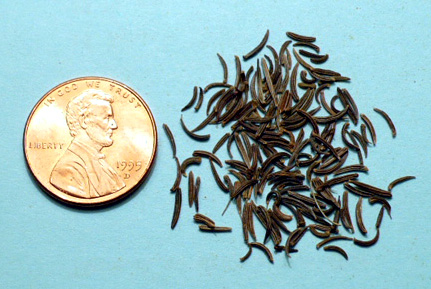
Seeds
Shahi Jeera
Dried fruits of Bunium persicum, now often placed in Elwendia persica, a slow-growing perennial of the carrot family from the dry high Himalaya and western Asia
One plant gives up no more than five to eight grams of seed, so this royal cumin is priced by the pinch and the wild stands are thinning.
-
old name, undated
Iran and northern India
Persians call it zireh kuhi, mountain cumin. The Hindi shahi zeera may be a distortion of the Persian syahi, black. In Bengali, kalo jeera means nigella, a different seed.
en.wikipedia.org -
folk medicine, undated
Iran and Kashmir
Iranian folk medicine uses the seed for digestive and respiratory complaints. In Kashmir it serves as a stand-in for caraway, against menstrual disorders and skin trouble.
explorationpub.com -
2013 to 2019
Kinnaur, Himachal Pradesh, India
A growers' group in Shong, Kinnaur, filed for geographical indication protection of Himachali Kala Zeera in 2013. The certificate was issued on 4 March 2019.
theippress.com -
2025
Himalaya
A 2025 review notes the species is listed as endangered because it grows slowly and the wild stands have been heavily harvested. Patience is the one thing the plant cannot be hurried out of.
explorationpub.com -
today
India, Pakistan, Afghanistan and Iran
Cooks use the smoky, earthy seed as a garnish on very special dishes, and in curry powders, pickles and chutneys. Outside this region it is almost unknown.
en.wikipedia.org

Pods and buds
Marathi Moggu
Dried unopened flower buds sold as kapok buds, usually identified as those of the silk cotton tree Bombax ceiba, though some sellers name Ceiba pentandra
This dried bud looks like a tiny brown tangle and tastes of mustard and black pepper once it is fried, but it is never eaten raw.
-
1889
India
A botanical text of 1889 records that the calyx of the flower bud of Bombax ceiba was eaten as a vegetable in India.
en.wikipedia.org -
palace lore, undated
Mysore, Karnataka, IndiaLegend
Bisi bele bath is said to have begun in the Mysore Palace kitchen, its recipe kept almost secret for two centuries. Modern spice powders for the dish often carry moggu.
en.wikipedia.org -
today
Karnataka and Andhra Pradesh, India
Moggu means bud in Kannada, and mogga in Telugu. Cooks roast or fry it and grind it with other spices. Cinnamon buds, dalchini moggu, are a different plant and no substitute.
potsandpans.in -
today
Northern Thailand and Shan State
The dried cores of Bombax ceiba flowers are an essential ingredient of nam ngiao, a spicy noodle soup, and of kaeng khae curry. In Myanmar the dried flowers are cooked too.
en.wikipedia.org -
today
Southern China
From late February to early May, elderly residents of southern China gather the fallen flowers to make tea or soup. The same tree feeds people on three borders.
en.wikipedia.org

Seeds
Wattleseed
Roasted, ground seeds of several Australian Acacia species, most often Acacia victoriae, gathered in the arid inland
Roasted wattleseed tastes of coffee, chocolate and hazelnut, and much of it still comes from wild trees in the arid inland.
-
claimed c. 30,000 years ago
Cuddie Springs, New South Wales
The Australian Museum says seed grinding stones date back about 30,000 years at sites such as Cuddie Springs. Archaeologists dispute that site's dating, and grindstones elsewhere in Australia are far younger.
australian.museum -
at least 4,000 years, by some accounts
Central Australia
Sources differ on how long wattleseed has been eaten, from 1,000 to 6,000 years. Women ground it between stones, about two hours for half a kilogram, then baked the dough in coals. A slab could last nine years.
rsv.org.au -
from 1814
British Empire
From 1814 Australian acacias were recognised for the tannin in their bark and grown as plantation crops across the British Empire. Elsewhere the same trees were feeding people from their seed.
en.wikipedia.org -
1970s
Africa
Wattleseed cultivation began in Africa in the 1970s for drought-resistant nutrition, and Acacia colei is grown in Niger.
spiceography.com -
today
Australia
Cooks put wattleseed in ice cream, bread, chocolate and sauces, and use it as a caffeine-free coffee stand-in. Supply is part foraged and part cultivated, and harvests vary from year to year.
spiceography.com
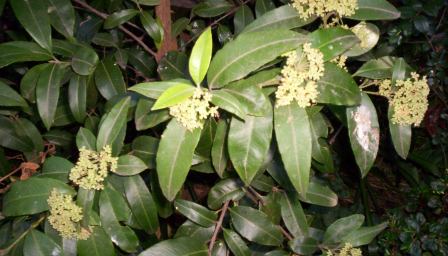
Leaves
Lemon Myrtle
Leaves of Backhousia citriodora, a rainforest tree of coastal Queensland and northern New South Wales
Nearly all of the lemon scent in this leaf is one compound, citral, and Aboriginal cooks were wrapping fish in it long before any lab named it.
-
for thousands of years
Queensland and northern New South Wales
First Australians used lemon myrtle for thousands of years, wrapping fish in paperbark with the leaves to infuse it, and crushing leaves for calm and for headaches.
australiannativeproducts.com.au -
1853
Melbourne, Australia
Ferdinand von Mueller named the genus Backhousia in 1853, for his friend the English botanist James Backhouse. The tree had its European name long after it had its use.
en.wikipedia.org -
1888
Australia
In 1888 chemist Bertram first isolated the essential oil. Citral makes up 90 to 98 percent of the steam-distilled oil, and fresh leaf gives 1 to 3 percent.
en.wikipedia.org -
World War II
Australia
During World War II the soft drink maker Tarax became the first company to use lemon myrtle oil as a lemon flavouring.
en.wikipedia.org -
1989
Australia
In 1989 Peter Hardwick began investigating lemon myrtle as a commercial crop and commissioned gas chromatography analysis of the leaf. After the war its trade had dwindled, as lemongrass took its place.
en.wikipedia.org -
today
The Channon, New South Wales
Australian Native Products, the largest grower and exporter, farms 110 hectares at The Channon, with more in Queensland. Most commercial lemon myrtle comes from those two states.
australiannativeproducts.com.au

Leaves
Pandan
Fragrant leaves of Pandanus amaryllifolius, a sterile screw pine grown in Southeast and South Asia and thought to come from the Maluku Islands
Pandan smells of freshly cooked rice because it shares an aroma compound with jasmine and basmati, and nobody has found it growing wild.
-
ancient times, date unknown
Maluku Islands, Indonesia
Pandan is believed to have been domesticated in ancient times. No wild population has been confirmed, and the plant is sterile, spread only by cuttings.
en.wikipedia.org -
1832
Amboyna, Maluku Islands
The Scottish botanist William Roxburgh described the plant in 1832 from the Maluku island of Amboyna. Only one male flowering specimen has ever been reported.
blogs.reading.ac.uk -
October 2017
United Kingdom
In October 2017 the cook Nigella Lawson predicted pandan would displace matcha and avocado toast. The claim stirred a quarrel over who had discovered the leaf.
en.wikipedia.org -
today
Sri Lanka
In Sri Lanka it is called rampe, grown in household gardens and cooked into curries beside curry leaves. A leaf for the rice pot sits next to a leaf for the pan.
en.wikipedia.org -
today
Thailand, Malaysia and Indonesia
Thai cooks wrap chicken in pandan leaves and fry it. Malay nasi lemak and Indonesian nasi kuning take its scent and green colour, and traditional cakes use it too.
blogs.reading.ac.uk

Leaves
Epazote
Leaves of Dysphania ambrosioides, formerly Chenopodium ambrosioides, a pungent herb of Mexican and Central American cooking
Its Nahuatl name means skunk sweat, and cooks in Mexico still drop a sprig in the bean pot for a reason a doctor gave in the 1500s.
-
Aztec era, before 1521
Mesoamerica
The Nahuatl name epazotl comes from words meaning skunk sweat. Aztec and Maya healers used the herb against intestinal parasites such as pinworms and hookworms, and as a digestive aid.
blog.herbsociety.org -
1570 to 1577
Mexico
The physician Francisco Hernandez studied Mexican medicinal plants in the 1570s. He recorded epazote as warming, a relief for asthma and a remedy for intestinal worms.
blog.herbsociety.org -
late 16th century
SpainLegend
It is said that Hernandez may have carried epazote to Europe along with maize and cacao. That is a told guess, not a proven record.
blog.herbsociety.org -
1753
Sweden
Carl Linnaeus described the species in 1753 as Chenopodium ambrosioides. A Nahuatl herb got a Latin name two centuries after the Spanish arrived.
en.wikipedia.org -
today
Mexico
Cooks add epazote to beans, where it aids digestion. Its oil is 10 to 70 percent ascaridole, the compound that kills worms, so too much can bring nausea. A sprig is enough.
blog.herbsociety.org
Jar photographs from Wikimedia Commons, credited on each open jar. A few show the living plant where no photo of the dried spice was free to use.