
Moutabbal, Jordan's Eggplant Gone Soft in the Fire
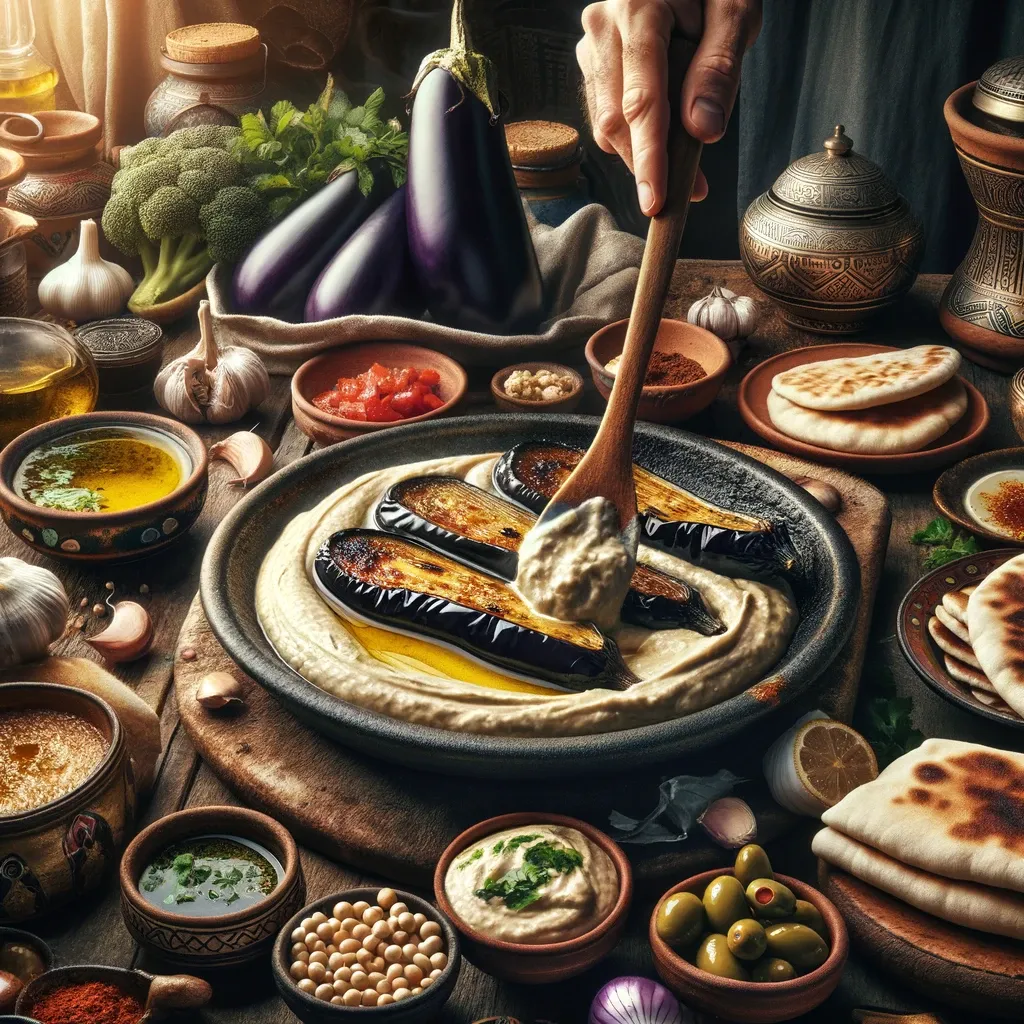
An eggplant laid on an open flame blisters, blackens, and slumps. In a Jordanian kitchen that is not ruin. It is the start of moutabbal, and the eggplant, loved there for how much it can become and how deep it tastes, is the whole reason for the dish. In the busy kitchens of Jordan, in air thick with spice and oven heat, good cooks turn it into something else, knowing that a plain thing done well is enough.
Moutabbal asks for an old method and a little care. The eggplants go over an open flame or into a hot oven until their skins blister and go black. The fire gives them their smoke and leaves the flesh so tender a spoon goes through it. That char, an old habit of the kitchen, is where the dish gets its depth.
Once the eggplants are roasted, the burnt skins come away and the soft, smoky flesh is left behind. It is mashed until creamy, a firm vegetable now ready to spread on bread. To it goes tahini, the sesame paste that brings richness and a slight bitterness, steadying the eggplant’s own sweetness.
Garlic follows, crushed to a paste with salt, and it brings a sharp warmth. Fresh lemon juice cuts through the richness with its brightness, and a thread of olive oil on top smooths everything over and holds it together. The smoke stays underneath all of it, low and steady, like a voice in the next room.
Moutabbal is never eaten alone. In Jordan it comes as part of a mezze spread, ringed by olives, flatbread, and other dips, and it pulls people into sharing and talk. Jordanian hospitality is generous, and this is one of its plainest forms.
As moutabbal traveled out of Jordanian family kitchens and into the wider world, it changed a little to suit the people who took it in. At its center it stayed Jordanian, a dish that shows how a people can make something simple taste of a great deal.
Today moutabbal is a small reminder of how good plain cooking can be, and how much better it is shared. It teaches the slow art of cooking with fire and how much flavor waits inside a humble vegetable. The table it gathers matters as much as the bowl.
When you drag your bread through the smoky cream of moutabbal, think of the eggplant on the flame and the hands that turned it. Somewhere in Jordan a table is being set, the olives are out, the bread is warm. What the fire took from the eggplant, it gave back as smoke.
Jordanian Moutabbal (Eggplant Dip)
- Serves
- 4-6
- Time
- 45 mins
- Difficulty
- Easy
Ingredients
Method
- Set the oven temperature to 400°F (200°C). Arrange the eggplants on a baking sheet and roast until tender, about 30-40 minutes.
- Remove the eggplants from the oven and let them cool slightly. Once cool enough to handle, slice them open, scrape the flesh into a bowl, and throw away the skins.
- Add salt, minced garlic, lemon juice, and tahini to the eggplant in the bowl.
- Blend all the ingredients together until smooth and well combined, either using a blender or a food processor.
- Taste the mutabbal and add more salt if it needs it.
- Transfer the mutabbal to a serving dish and finish it with a thread of olive oil and a scattering of pomegranate seeds.
- Serve the mutabbal with flatbread or pita chips as a dip or as a side dish alongside grilled meats.
Notes
- Tips & Tricks: For a deeper flavor, blend a pinch of smoked paprika or ground cumin into the mutabbal.
From Fig & Ginger: https://www.figandginger.com/recipes/moutabbal-mastery-the-art-of-jordanian-eggplant-dip/
You might also make

Makdous, the Eggplant and Tomato Truce
Middle Eastern, 30 mins
Tamr Hindi, Where Tamarind Meets the Date
Middle Eastern, 10 mins
Iraqi Baba Ganoush with Pomegranate
Middle Eastern, 45 mins