
Burmese Curry Powder from Daw Aye's Stall in Yangon
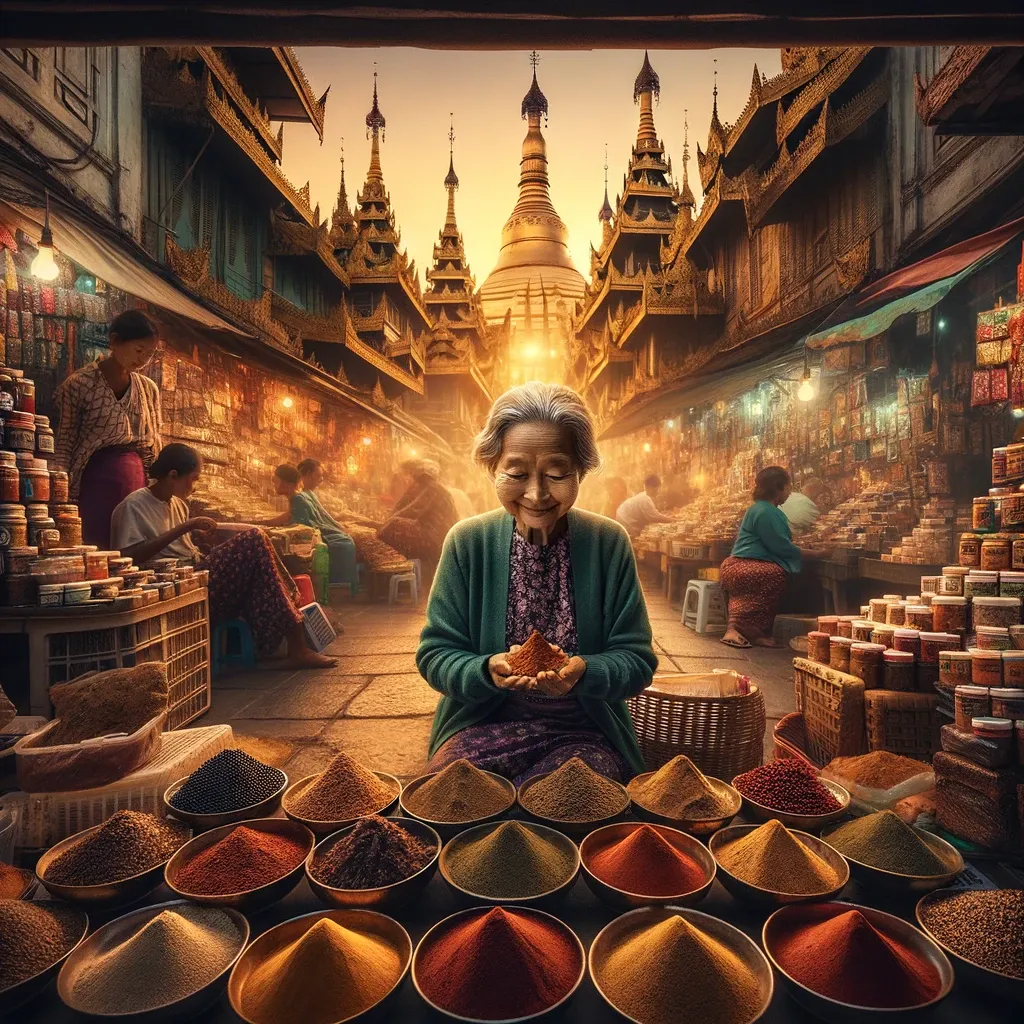
Gold pagoda spires shining over old British colonial walls gone soft with age, and below them the crowded streets of Yangon. The flavors here are as layered as Myanmar’s history. Old beside new, custom beside change: this is where I went looking for the roots of a quiet hero of the kitchen, Burmese curry powder.
As the early sun turned the city gold, the markets of Yangon woke up. Vendors calling, children laughing somewhere nearby, and the smell of spice hanging in the wet air pulled me toward a small stall in a corner. Its owner, a quick, bright-eyed old woman named Daw Aye, gave me a knowing nod. She had surely met plenty like me, come to Myanmar hunting for its kitchen secrets.
“You’re here for the ngapi?” she guessed, pointing to the fermented fish paste that is a cornerstone of Burmese cooking.
I smiled. “Close. I’m after the heart of Myanmar’s curries: Burmese curry powder.”
Her eyes lit up. “Ah. A story of love, war, and flavor,” she said quietly, waving me closer.
In a country where every meal is a chorus of tastes, the Burmese curry sings lead, and its voice comes from the curry powder. Daw Aye began her story, and took me back to the old Burmese kingdoms.
The legend goes that in the days of the Bagan Empire, a prince fell in love with a common girl. They kept their love hidden from the world. To tell him what she felt, she made a blend of spices, each one a part of their story: the warmth of turmeric for the ground their love stood on, the heat of red chili for its fire, coriander seed for how deep it ran, and earthy cumin for the hardships in their way.
Every evening at sundown she cooked a curry for the prince with her blend. The smell drifted through the palace, and wherever he was, the prince followed it, knowing she was waiting.
Like so many old love stories, theirs met walls too high to climb. The spice blend outlived them. It passed from mother to daughter, and it changed over the years as Myanmar itself took in the cooking of India, China, and Thailand next door.
“The real magic,” Daw Aye said softly, leaning in, “is less in the spices than in the ritual. They are dried in the sun, then roasted, and only then ground together. It is slow work done with love, like the story it came from.”
She handed me a little pouch of the powder. When I opened it, the smell rose straight up at me, heady and warm, familiar and yet unlike any curry I had met before.
“You see,” she went on, “Burmese curry powder is more than flavor. It is an inheritance. The stories, the dreams, the soul of Myanmar, all in one blend.”
As the afternoon faded I walked through Yangon with the pouch held tight in my fist, far away in my own head. Myanmar has had a hard and restless history and a bright, stubborn culture, and it is a country made of stories. In that small blend of spices I had found one more: love, endurance, and the old wish to reach another person across a distance.
That night I sat in a local eatery over a bowl of Burmese curry, and every mouthful tasted deeper than the one before. A bowl of curry is the shortest way to a country. It was a reminder that food is how we tell each other who we are, one flavor at a time.
If you ever find yourself in the winding streets of Yangon, or anywhere in Myanmar, look for that old blend and taste it. Think of the prince following the smell through the palace at dusk. Somewhere a pot is on the fire, and someone is still waiting.
Burmese Curry Powder
- Serves
- Makes about 1 cup
- Time
- 30 mins
- Difficulty
- Easy
Ingredients
Method
- In a wide skillet or frying pan, dry roast the fenugreek seeds, coriander seeds, cumin seeds, black peppercorns, cardamom seeds, clove buds, and fennel seeds over medium heat. Stir frequently to prevent burning.
- Roast the spices until they turn aromatic and slightly darker in color, approximately 5-7 minutes. Be attentive; spices can go from perfectly roasted to burnt very quickly.
- Once roasted, transfer the spices to a plate or tray and allow them to cool completely.
- Once cooled, combine the roasted spices with the turmeric powder and red chili flakes in a spice grinder or a mortar and pestle.
- Grind the spice mix to a fine powder.
- Pour the Burmese Curry Powder into a jar with a tight lid and store it in a cool, dark place.
Notes
- Tips & Tricks: For an authentic taste, always use whole spices and grind them fresh. This curry powder can be used as a base for various Burmese dishes or even to add a twist to traditional recipes. The unique blend of spices will lend depth and richness to any dish it graces.
From Fig & Ginger: https://www.figandginger.com/recipes/the-burmese-soul-a-journey-into-the-heart-of-myanmars-curry-powder/
You might also make

Massaman Curry Paste and the Ships That Carried It
Asian & Pacific

Sambal Oelek, the Red Paste Sari Ground by Hand
Asian & Pacific, 30mins

Hawaiian Luau Spice Mix and the Salt of the Pacific
Asian & Pacific, 10 mins