
Turkish Baharat and the Merchant of Anatolia
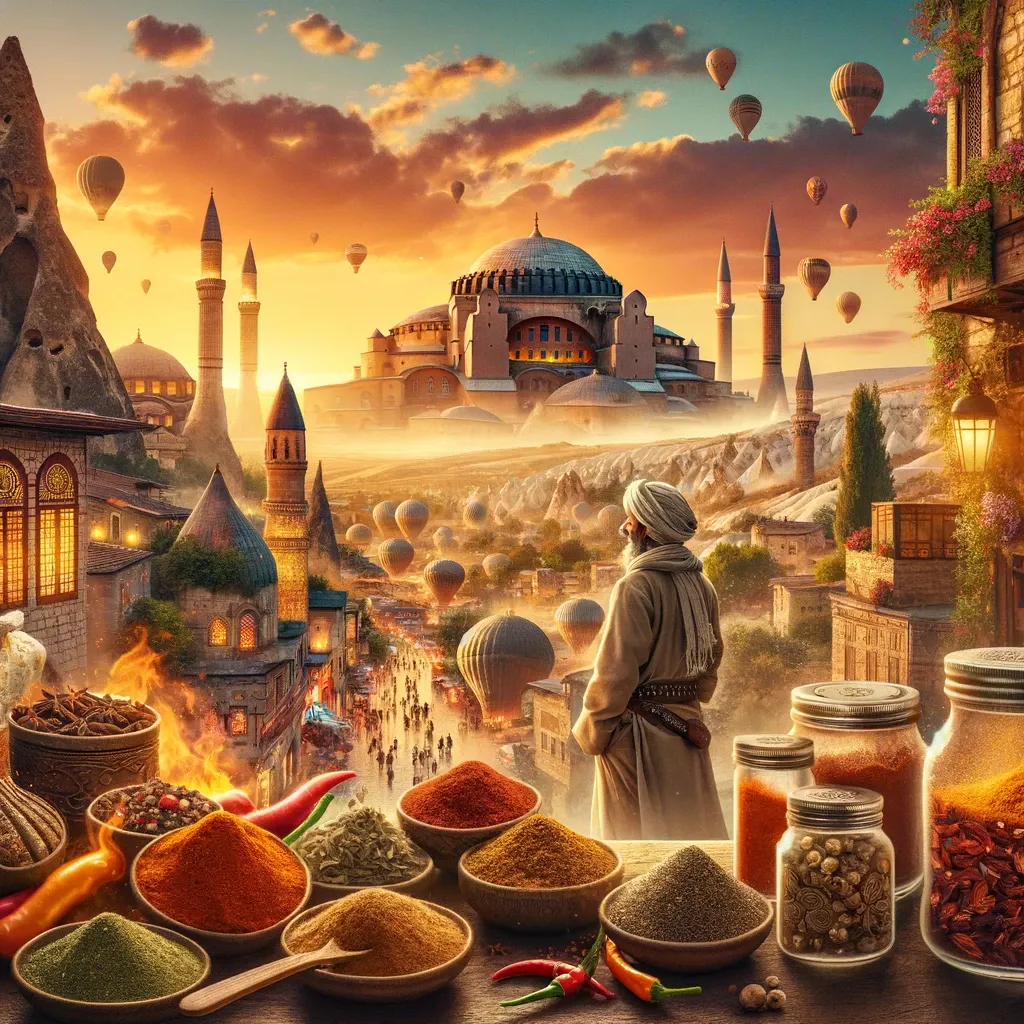
Winding alleys, great bazaars, two continents meeting at the water: this is Turkey. A meeting ground of many peoples, where the call from the minaret drifts over the smell of spice. Of all its stories, one stays in every kitchen and lingers on every tongue: the story of Turkish Baharat.
Go back with me, past the wide sprawl of Istanbul, to the days when caravans walked the Silk Road and Anatolia was a crossroads of the world. At the center of this story stands Cemal, a spice merchant with dreams bigger than the Hagia Sophia and a temper as hot as an Anatolian chili.
One evening, as the sun laid gold over the fairy chimneys of Cappadocia, Cemal sat and wondered. This land, where empires had crossed and recrossed, was asking for a blend that would carry its soul: one that tasted of Turkish passion, Turkish warmth and all the many peoples who had passed through.
The search began in the crowded bazaars of Bursa. Cumin for its warmth, like the Turkish hearth. Paprika for its heat, like the Anatolian sun. Cloves, as mysterious as the old Turkish stories, and nutmeg, carrying a hint of Sufi dancers turning under the stars. He chose each spice for its taste, and for the story it carried in with it.
As Cemal mixed them, something happened in the bowl. The blend smelled wonderful, and it did more than that. It sang of the Bosphorus, of dervishes and sultans, of the snowy Taurus mountains and the sunny Aegean shore. Turkish Baharat was born.
Word spread quickly. From the great feasts of Topkapi Palace to the plain houses of Anatolian villages, Baharat became the heart of Turkish cooking. It went into kebabs grilled over open fire, gave depth to mezes shared over raki, and warmed the stews that carried people through cold Eastern nights.
The Ottoman Empire rose to its height and fell away, but the pull of Baharat never weakened. It outlasted the eras, a thread running through Turkish history from one generation to the next.
Modern Turkey, half old ways and half new ideas, came to see Baharat as a sign of its own spirit as well as a staple. Chefs from Izmir to Antakya began to play with it, giving the old blend new turns, always careful to leave its soul alone.
Walk the streets of Istanbul today, where Europe meets Asia, and you cannot miss the smell of Baharat. From the smoky grills by the Galata Bridge to the smart restaurants of Bebek, it is always there, carried on the air like proof that Turkey still loves a flavor with a story in it.
So when you stand before the white terraces of Pamukkale or walk among the ruins of Ephesus, go looking for this blend. Find a grill, a plate, a pinch of red and brown. Somewhere in that pinch is Cemal, still mixing, still dreaming bigger than the domes.
More stories

Mahlab, a Cherry Stone Spice from Constantinople
Middle Eastern, 10 mins
Makdous, the Eggplant and Tomato Truce
Middle Eastern, 30 mins
Tamr Hindi, Where Tamarind Meets the Date
Middle Eastern, 10 mins