
Oaxaca, the Land of Seven Moles
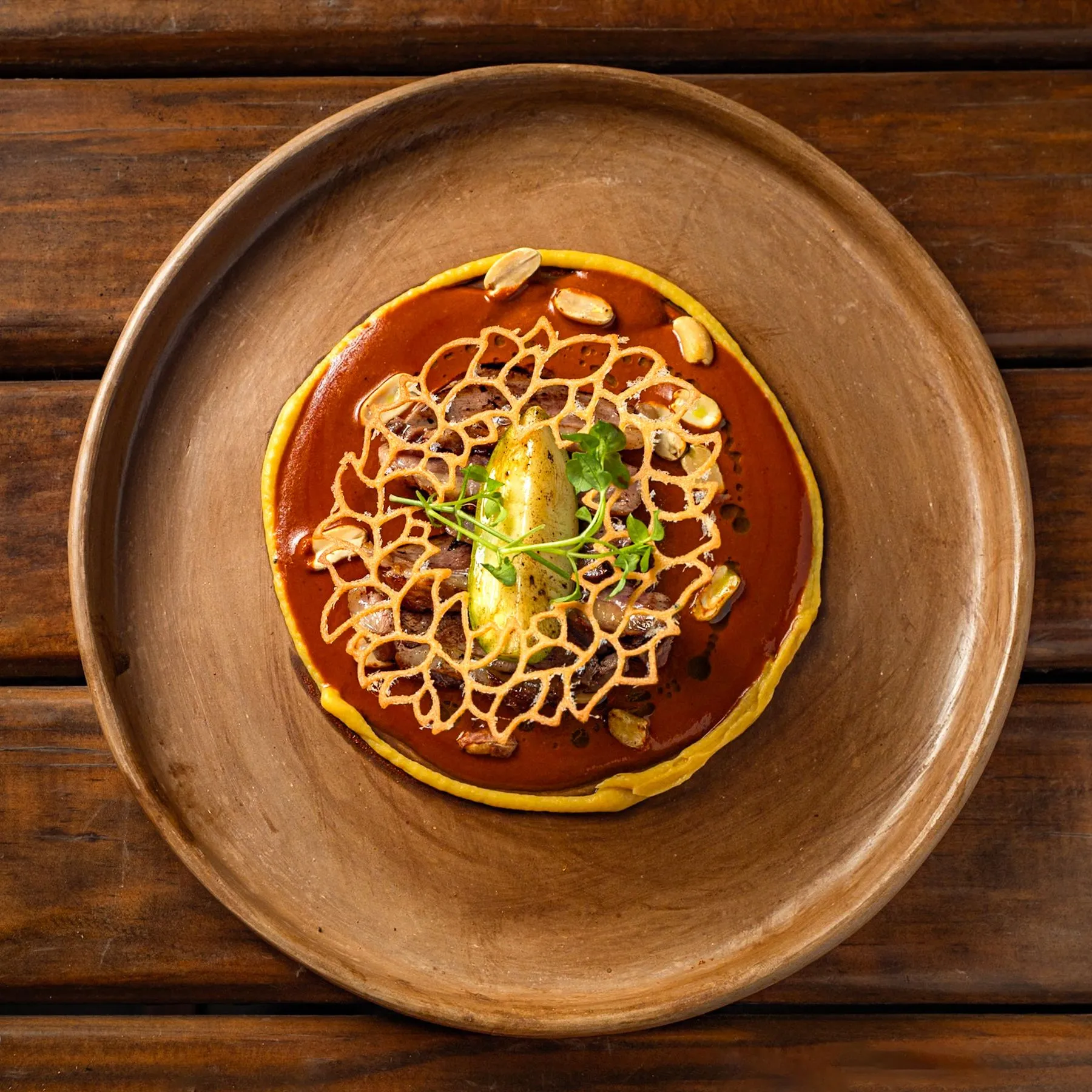
In the market in Oaxaca City, there is a stall where the paste is sold by weight. It sits in deep tubs, black, red, brick and yellow, glossy as wet clay. A woman spoons it into a plastic bag, ties the top and hands it over. At home it will be loosened with stock and poured over chicken. What you carried out of the market was a week of somebody else’s work.
Most regions are proud of one great sauce. Why does Oaxaca have seven?
Did you know the word just means sauce?
Mole comes from molli, the Nahuatl word for sauce. In Mexico it covers a family, not a recipe. What the family shares is method: chiles toasted and soaked, seeds and spices roasted, everything ground into a paste and fried, then slowly thinned with broth.
Oaxaca, in the mountains of southern Mexico, has more microclimates, more native chiles and more Indigenous languages than almost any state in the country. Its kitchens built a sauce for each.
The seven, by colour
- Negro: the famous one. Black from chiles toasted almost to charcoal, with chocolate, nuts, seeds, dried fruit and spices. Recipes often run to thirty ingredients or more, and some cooks take two days over it.
- Rojo: red, built on dried chiles and sesame, often the hottest of the seven.
- Coloradito: brick red and the sweetest, softened with plantain or banana, raisins and cinnamon.
- Amarillo: yellow from local chiles, thickened with masa and often stuffed into empanadas.
- Verde: green from tomatillos, fresh herbs and green chiles, light enough to eat on a weekday.
- Chichilo: smoky and bitter, darkened with charred chiles and scented with avocado leaf. By tradition it is a dish for funerals.
- Manchamanteles: the “tablecloth stainer”, fruity and red, cooked with pineapple and plantain.
Ask three Oaxacan cooks and you may get three different lists. Some count an eighth. Every family has its own recipe and considers the others slightly wrong.
Did you know some of its chiles barely grow anywhere else?
Several of the moles depend on the chilhuacle, a chile grown in a small area of the Cañada region of Oaxaca. It comes in black, red and yellow forms. Harvests are small and the price is high, so cooks outside Oaxaca often substitute guajillo or ancho, and Oaxacans will tell you the sauce is not the same.
Did you know the chocolate is part of the savoury kitchen?
Cacao was drunk in Mesoamerica long before Europeans arrived, and Oaxaca still grinds its own. In the markets, mills turn roasted cacao, sugar, cinnamon and almonds into bars and paste for drinking chocolate. The same chocolate goes into mole negro, where it does not make the sauce sweet. It makes it deep.
The mole we know today is a colonial meeting: native chiles, tomatoes and cacao alongside sesame, almonds, cinnamon and cloves brought across the Atlantic. Legends credit nuns in a convent kitchen with inventing it. Like most kitchen legends, the story is easier to repeat than to prove.
Did you know mole marks the year?
Mole is not everyday food. It is the dish of weddings, baptisms and saints’ days. In the first days of November, for the Day of the Dead, families set plates of mole negro on home altars beside marigolds and candles, food for visitors who will not eat it. When a family member dies, chichilo may be cooked for the mourners. One sauce can carry a whole life from the first feast to the last.
The bag from the market
Back at the stall, the woman ties another bag of black paste and hands it across the counter. Inside it are toasted chiles, ground seeds, chocolate, a grandmother’s proportions and a family’s patience. Loosen it with broth at home and the kitchen will smell of Oaxaca for a day. The sauce came in a bag. The recipe never left the house it came from.