
Umami, the Taste a Chemist Named
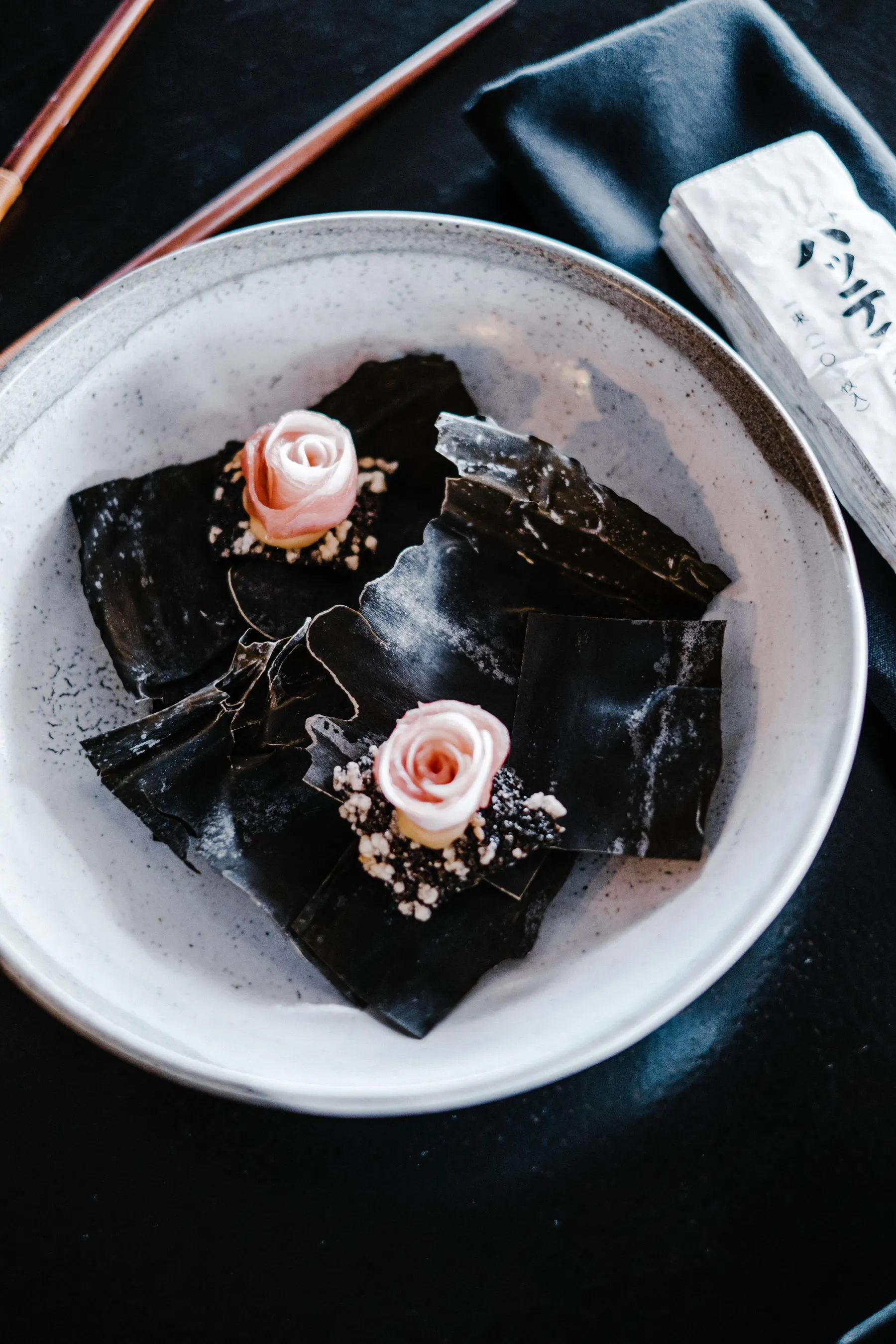
A sheet of dried kombu goes into a pot of cold water. Nothing much happens. The water warms, a faint smell of the sea comes up, and the kelp is lifted out before the pot boils. What is left looks like almost nothing. Taste it and your mouth keeps waiting for more.
Sweet, sour, salt and bitter had been named since the Greeks. The broth in that pot was none of them. So what was it?
A professor at his own table
Kikunae Ikeda taught chemistry at Tokyo Imperial University. The story most often told puts the question in front of him at dinner, over a bowl of tofu in kombu broth. He had studied in Germany. In the paper he published in 1909, he wrote that the same taste turned up in asparagus, tomatoes, cheese and meat, and was strongest of all in the plain Japanese broth.
In 1908 he went looking for it in the laboratory. He boiled down large amounts of kombu, drew off the salts and sugars, and was left with crystals. They were glutamic acid, an amino acid a German chemist had first pulled out of wheat gluten in 1866. Nobody before Ikeda had tied it to a taste.
He named the taste umami, from umai, a Japanese word for tasty. A year later, with the businessman Saburosuke Suzuki, he put a seasoning made from it on sale: monosodium glutamate, sold as Ajinomoto, “the essence of taste”.
The two that make it louder
Ikeda found one key. His students found two more.
In 1913 Shintaro Kodama traced the savour of katsuobushi, the dried bonito shaved over Japanese dishes, to a second compound, inosinate. In 1957 Akira Kuninaka found a third, guanylate, in dried shiitake.
Then came the surprise. Put glutamate and inosinate together and the taste does not simply add up. It multiplies. This is why the classic Japanese dashi uses both kombu and bonito. It is also why so many kitchens with no contact with Japan arrived at the same pairings: a cheese melted over meat, tomato cooked down with anchovy, mushrooms in a beef stew. Cooks had been doing the chemistry for centuries. They had only been missing the names.
Where you already taste it
Umami lives wherever protein has been broken down, by time, sun, salt or microbes.
- Tomatoes: the free glutamate rises as they ripen, which is why a pale winter tomato tastes of water.
- Aged cheese: a long-aged Parmigiano Reggiano carries some of the highest natural levels of any food. The white specks in an old wedge are crystals of an amino acid formed as the cheese ages.
- Fish sauce and soy sauce: months of fermentation turn fish and beans into a liquid built for exactly this.
- Breast milk: human milk carries far more free glutamate than cow’s milk. The taste may be the first one any of us learns.
A taste the tongue was built for
For most of the twentieth century, Western science treated umami as a curiosity, a Japanese idea about seasoning. That changed around the year 2000, when researchers identified receptors on the tongue that respond to glutamate. Umami had its own door into the body. It was a basic taste after all.
The seasoning had a harder time. In 1968 a letter to a medical journal blamed a cluster of symptoms on Chinese restaurant food, and MSG took the blame for decades. Controlled studies since have not found the reactions people feared, and food regulators in the US and Europe treat it as safe. The glutamate in a spoon of MSG is the same molecule as the glutamate in a ripe tomato. The body cannot tell which one came from a factory.
Cooking with the fifth taste
A few habits put umami to work at home:
- Simmer a strip of kombu in the water for soup, beans or rice, and lift it out before the boil.
- Add a spoon of miso or a dash of fish sauce to a stew in its last minutes. It should taste deeper, not fishy.
- Keep the rind of a hard cheese and drop it into a pot of minestrone.
- Roast tomatoes until their edges darken. Time does the rest.
The broth at the end
Go back to the pot. The kelp is gone, the water is clear, and still the broth fills the mouth. For centuries cooks made it without a name for what they were making. One evening a chemist tasted it and asked a question. The word he found had been waiting at the bottom of the bowl the whole time.