
What Was Really on the Table in 1621
Four men walk out of a small settlement on the coast of Massachusetts with guns on their shoulders. The corn is in. The governor has sent them fowling, so that the colony can, in the words of one of them, “rejoice together” after the harvest. They come back with enough birds to feed the village for most of a week.
That walk is the oldest written trace of what Americans now call the first Thanksgiving. What did they actually eat?
One letter, a few lines
Almost everything we know comes from a single source. In December 1621 Edward Winslow, one of the Plymouth colonists, wrote a letter to a friend in England. It was printed in London the next year in a pamphlet now known as Mourt’s Relation. The account of the feast runs only a few sentences.
He writes of the four men sent fowling. He writes that “many of the Indians” came among them, among them Massasoit, the leader of the Wampanoag, “with some ninety men”, and that the colonists entertained and feasted them for three days. The Wampanoag men went out and killed five deer, and gave them to the governor and the captain.
That is the menu as written: wildfowl and venison. Everything else is careful guessing.
What was probably there
The fowl were likely ducks and geese. Wild turkey is possible. William Bradford, the governor, wrote years later that the colony had “great store of wild turkeys” that autumn, though he did not tie them to the feast.
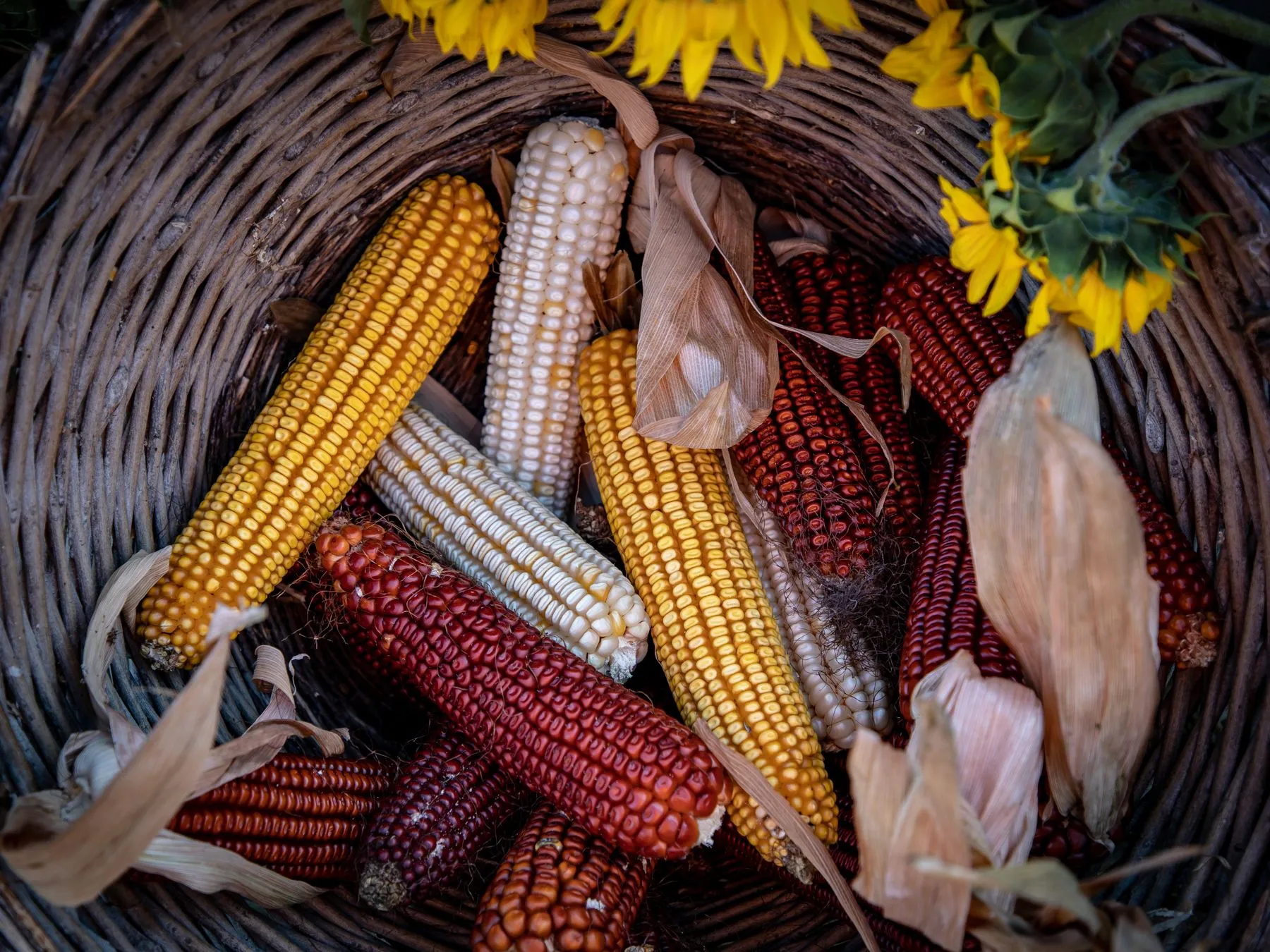
The coast gave the rest. Mussels, clams, eels and lobsters were plentiful, and the colonists ate them often. The Wampanoag had taught the newcomers to grow corn that spring, so corn would have been ground and cooked into a thick porridge or a flat bread. Squash and pumpkin were in the fields, and were most likely stewed. Nuts, wild grapes and dried berries could have filled out a table.
What could not have been there
The pumpkin pie is the easiest to strike. A pie needs wheat flour, butter and sugar. The colony had little or none of any of them after its first hard year. Potatoes had not reached New England. Neither had sweet potatoes. Cranberries grew wild, but a sweet cranberry sauce needs sugar the settlers could not spare.
Even the name is borrowed. To the Plymouth colonists, a day of thanksgiving was a religious day, spent in prayer and church service, not at the table. A three-day feast with games and shooting was something else: an English harvest celebration, held on a new shore.
How the feast became a holiday
For two centuries the meal at Plymouth was a footnote. Winslow’s letter was rediscovered and reprinted in 1841, and an editor added a note calling the gathering “the first Thanksgiving”. The phrase stuck.
The holiday itself owes most to a magazine editor, Sarah Josepha Hale, who wrote letters to presidents for nearly two decades asking for a national day of thanks. In 1863, in the middle of the Civil War, Abraham Lincoln proclaimed one for the last Thursday of November. The turkey, the stuffing and the pie arrived with the nineteenth century, not with the Mayflower.
The other side of the table
The feast was also a meeting between two peoples who had signed a treaty of mutual defence that spring. The alliance held for about fifty years. In 1675 war broke out between the colonists and a coalition led by Metacom, Massasoit’s son. Since 1970, some Native Americans have gathered at Plymouth on Thanksgiving Day for a National Day of Mourning.
Both stories begin at the same table. Both are true.
The table we inherited
Picture the meal as Winslow left it: smoke from open fires, venison turning over the coals, birds plucked by the dozen, ninety guests and some fifty colonists eating in the open for three days. No pie. No cranberry jelly from a can. The menu we lay out every November was written long after the plates were cleared. What came down to us from 1621 is smaller and older than the feast: a field with the harvest in, and two peoples who sat down to eat on the same ground.