
Moussaka at Costas's Taverna in Athens
A smell of cinnamon and browning cheese, drifting out of a corner taverna. Athens talks to anyone who walks it, in smells and noise and the give of old stone underfoot. Sometimes what leads you is nothing you can see, only a scent on the air, and at the end of it a dish whose layers read like the pages of an old book: moussaka.
At the taverna an old man named Costas saw I was a stranger and waved me over. I sat, and a warm dish arrived in front of me. It was my first moussaka: a golden lid of béchamel over minced meat, laid between soft, charred slices of aubergine. Costas saw the question on my face and began.
“Every family in Greece has its own moussaka,” he said, his voice rough, his eyes bright. “Like most good stories, though, it did not start only in Greece.”
This is how he told it. As the Byzantine Empire spread, it took many peoples under its wing, and their cooking came along. The Arabs, masters of the aubergine, showed the Greeks an early form of the dish. It was simpler then, aubergine and spiced meat in layers, no béchamel at all.
Costas leaned in. “Moussaka was a bridge. Empires rose and fell, and moussaka walked across all of them, picking something up in every land.”
The Ottomans, he said, brought new spices and made it deeper. Still it was the Greeks, in their own way, who finished it. They crowned it with béchamel, a soft roof over the weight of the meat.
“Anthony,” Costas said, using my name as if we had known each other for years, “you have to understand. Here moussaka is proof of something. Proof that people can take hard times and mixed blood and still make something beautiful.”
The evening went on. The sun laid its last gold on the Acropolis, and I took another bite and let the history go soft on my tongue. The cream of the béchamel, the bite of the tomato, the earth in the aubergine: each layer had come from somewhere, with an army or with someone walking home.
As the taverna emptied, Costas wrote out his family’s recipe for me, a note of history beside every ingredient. I folded it like a letter. It read like a family album, the faces stacked one on another.
I left Athens carrying the taste and the story both. Moussaka will not be pinned to one people or one century. It keeps changing the way a family does, borrowing, sharing, folding in. A house is only the people who kept coming back to it.
Now, whenever a plate of moussaka is set in front of me, I am back at that table, Costas talking, the stone still warm from the day. I press the fork down through the layers, slowly, the way he told it, one empire at a time, until it reaches the bottom of the dish and finds home.
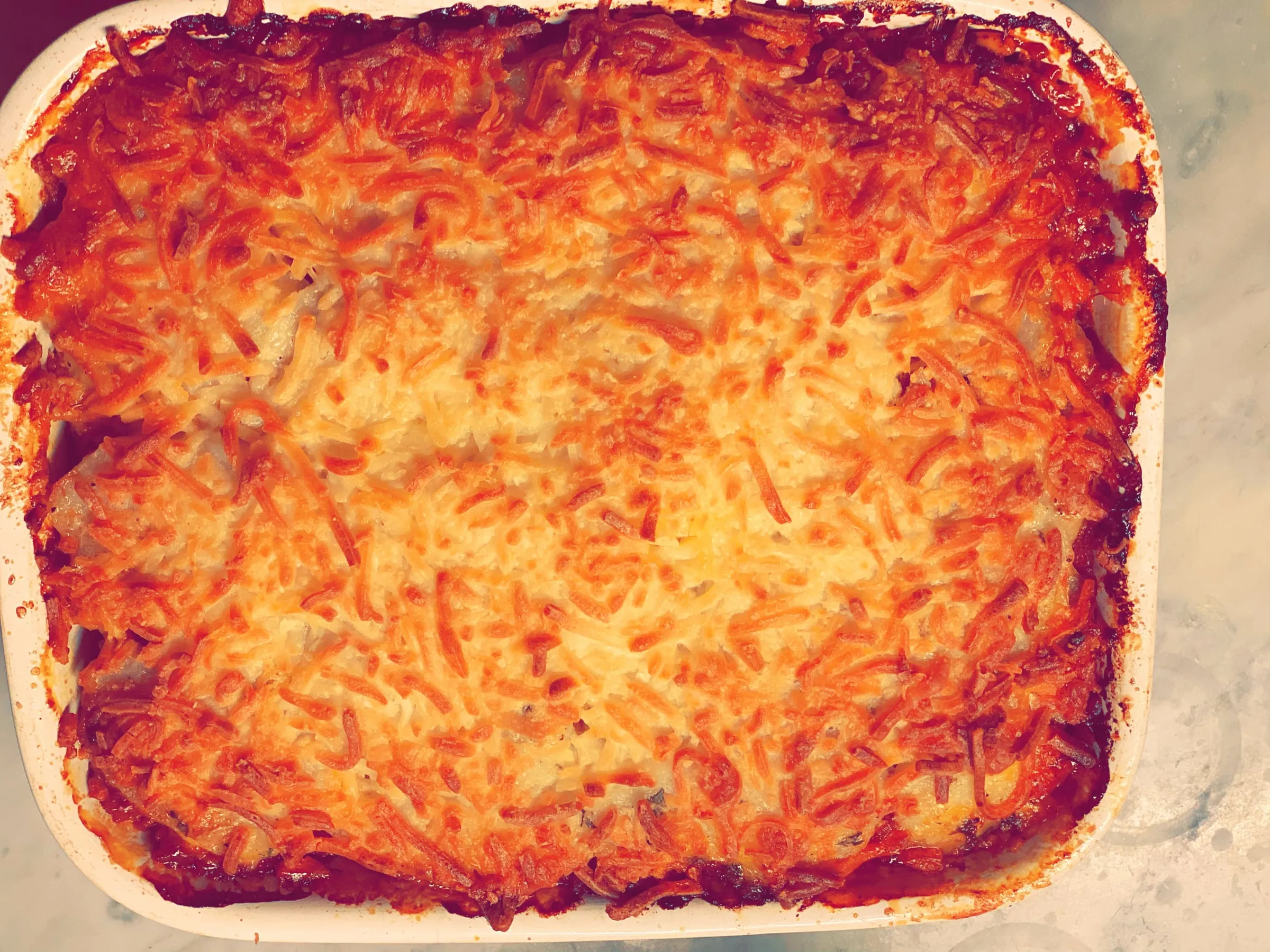
Moussaka
- Serves
- 4-6
- Time
- 1hr
- Difficulty
- Easy
Ingredients
Method
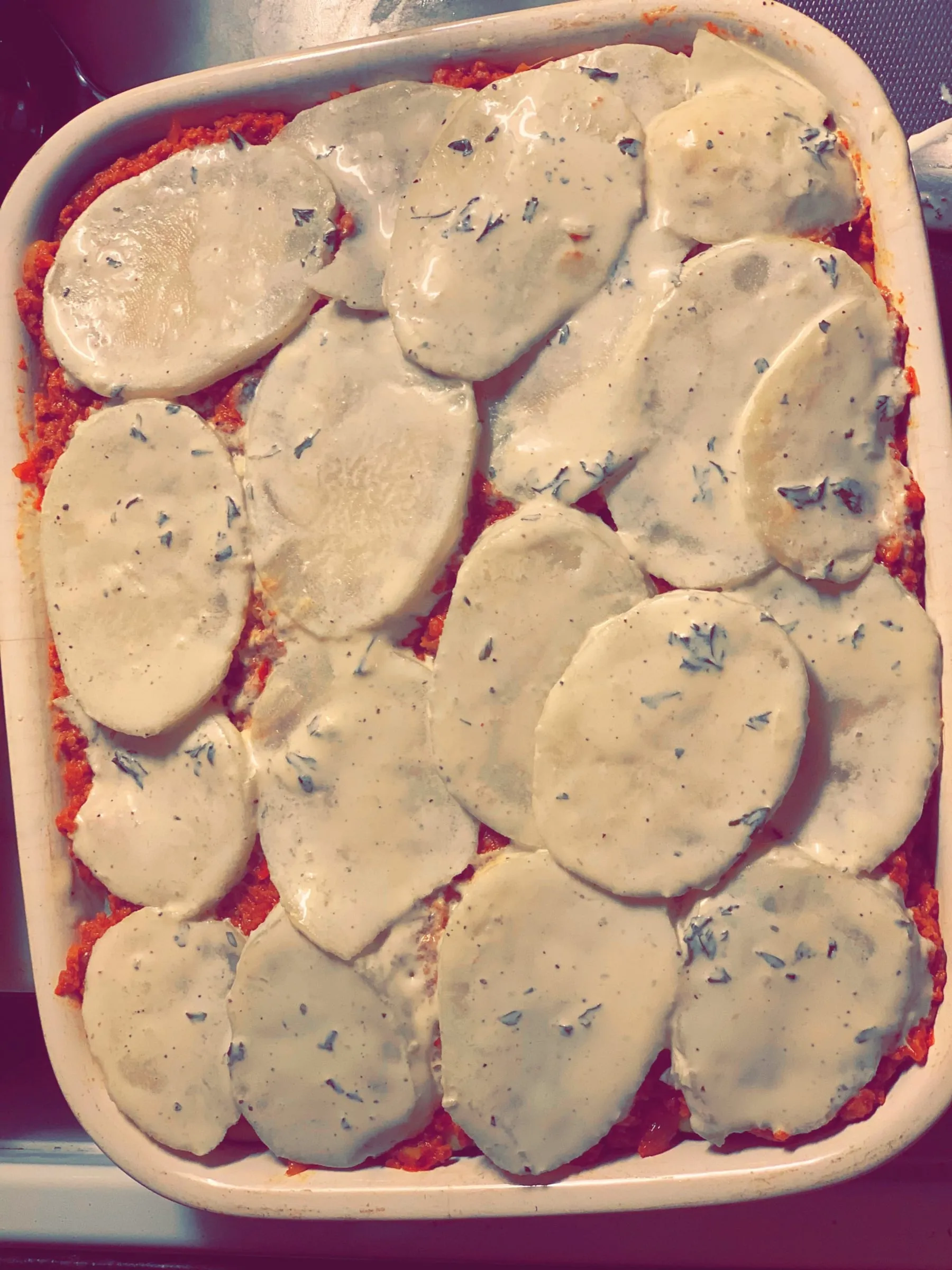
- For the layers2 large potatoes, parboiled.. in a cooker, cover with water and cook till almost coming to whistle. Or, In a pan, boil till you feel 5 more minutes and they will be soft-boiled. Basically, till the top is a bit soft, but the center still resists a poking knife/ fork. 1/2 cup cooking liquid cream, seasoned with salt, pepper, and any dried herb. 1 eggplant, sliced and 1 cup shredded cheese.
- Minced MeatIn a pressure cooker, Mix ginger garlic paste in yogurt, add chili powder, turmeric, garam masala powder, 1 tbsp oil, and cinnamon stick, and leave aside for a bit.
- Pressure cook it to one whistle, no water is to be added. Yogurt and mince oil are enough.
- In a wok, add the rest of the oil, add chopped onions, and fry till the edges get brown. Add mince mix from the cooker and fry, add tomatoes, and add salt, and coriander when the mutton is cooked and done. Can add a bit of warm water while cooking, but not to make a gravy. Add tomato ketchup and let it cool.
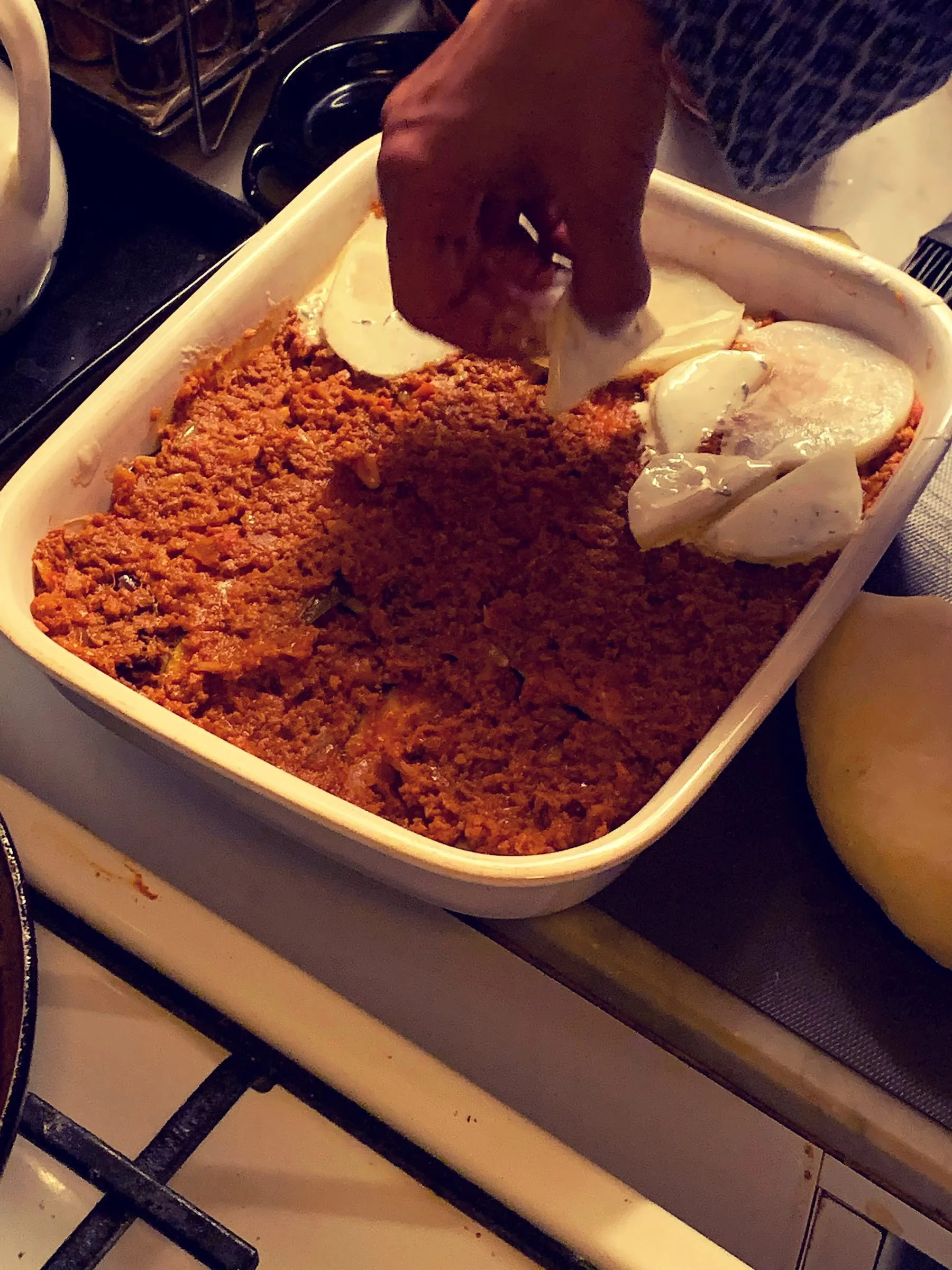
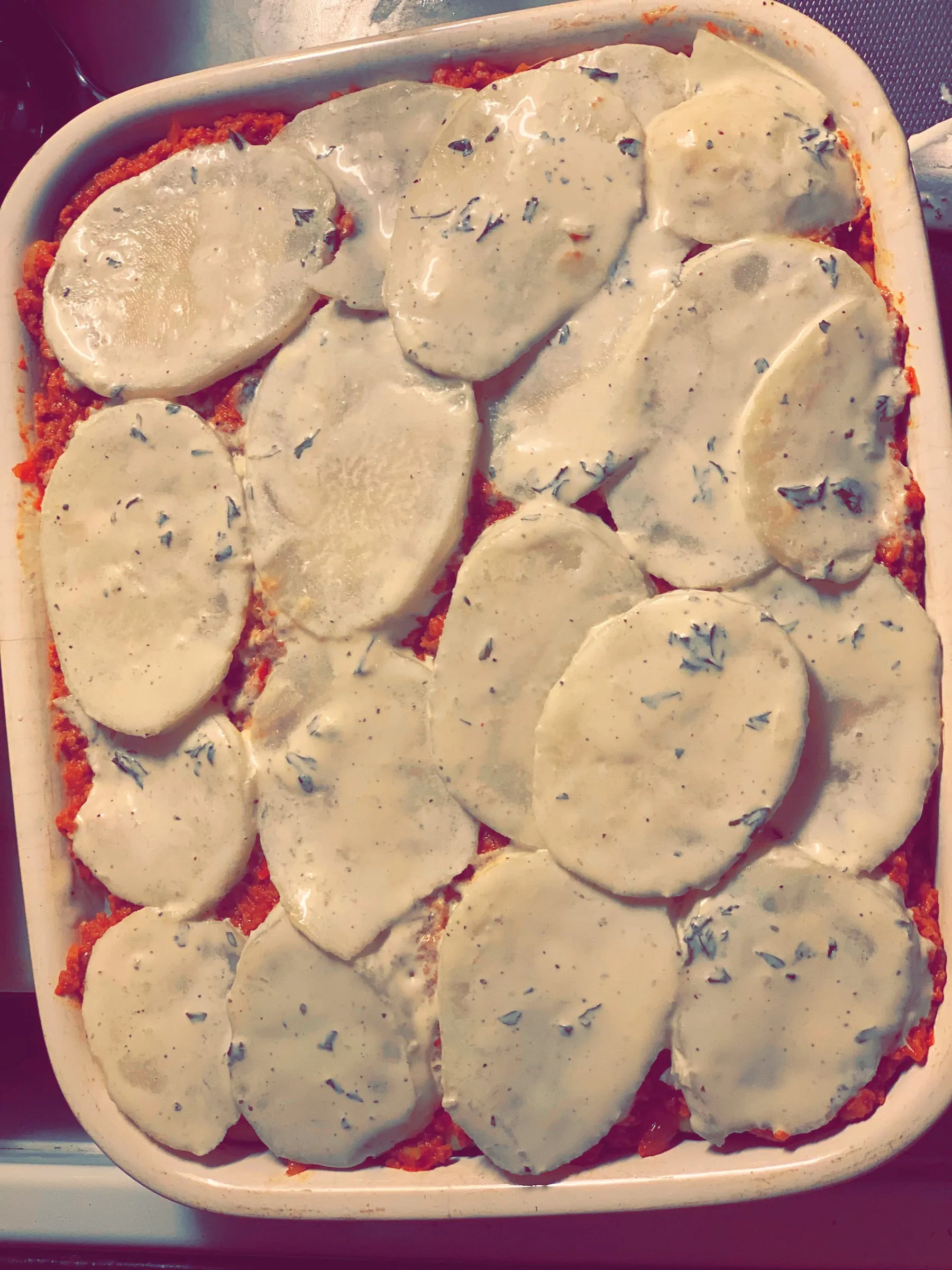
- LayeringIn a baking dish, start with a thin layer of cooked minced mutton, Dip slices of potato in seasoned cream and layer. Then a layer of eggplant slices
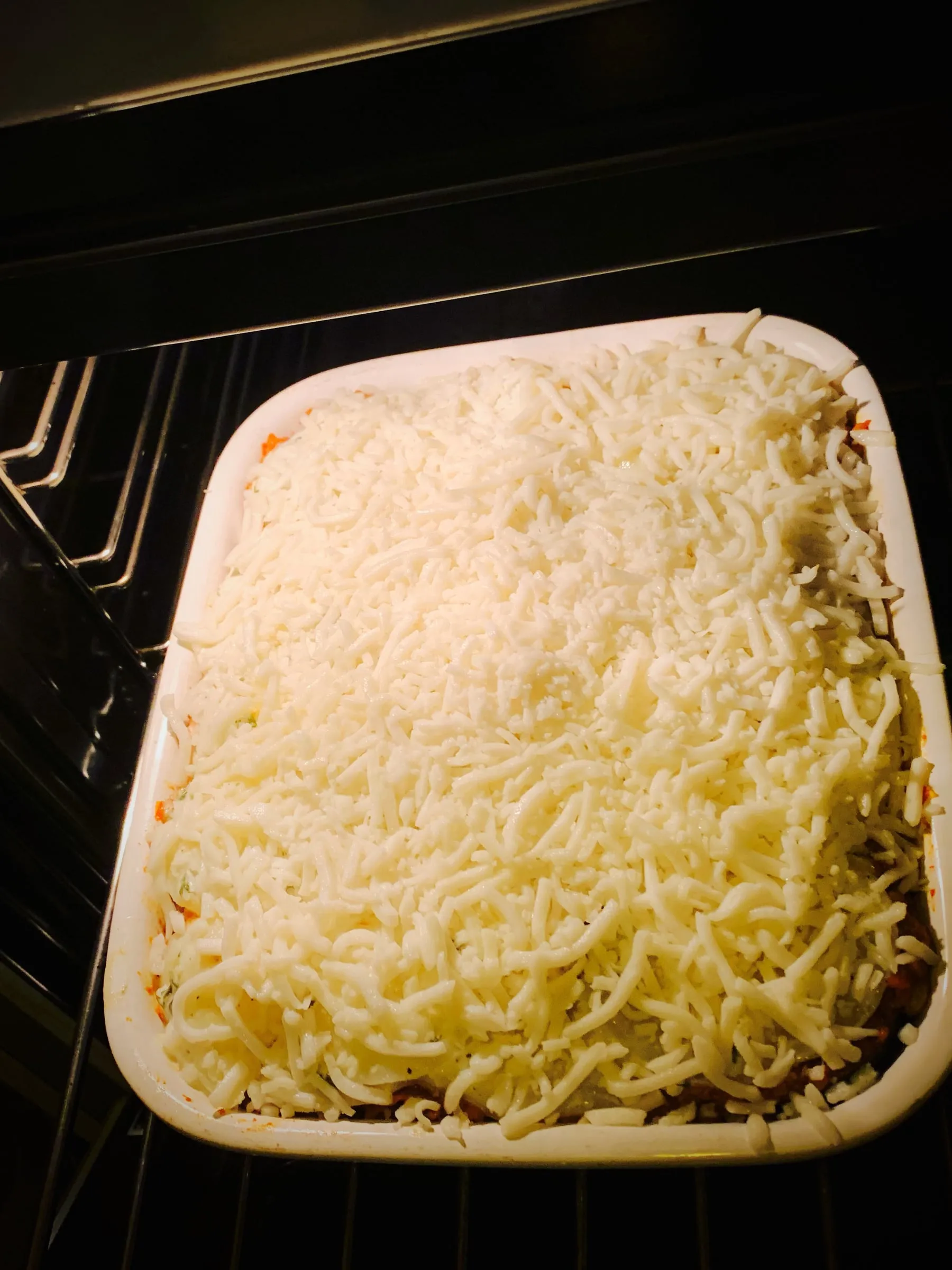
- Repeat in that order. Potatoes on top layer, add shredded cheese on top.
- Bake in moderate oven for 30 mins / until brown on top.
From Fig & Ginger: https://www.figandginger.com/recipes/the-intimate-tale-of-moussaka-layering-histories-and-flavors/
You might also make

Greek Tzatziki and the Sea Nymph Who Made It
Greek, 1 hour 5 mins
Chipotle Lime Dressing, Smoke and Sour from Mexico
Mexican, 5 mins

Miso Ginger Dressing and the Patience of Japan
Asian & Pacific, 5 mins